
Last updated October 16, 2026
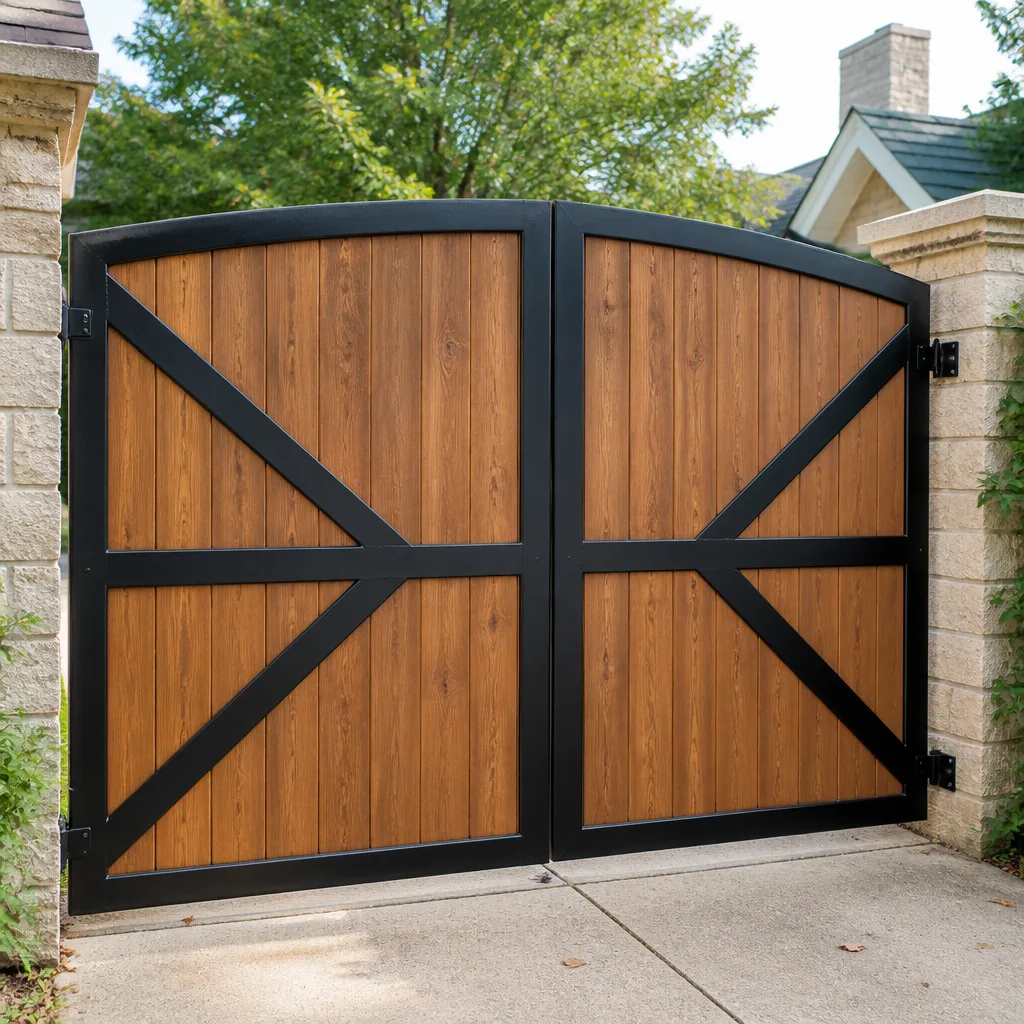 Wood & steel frame
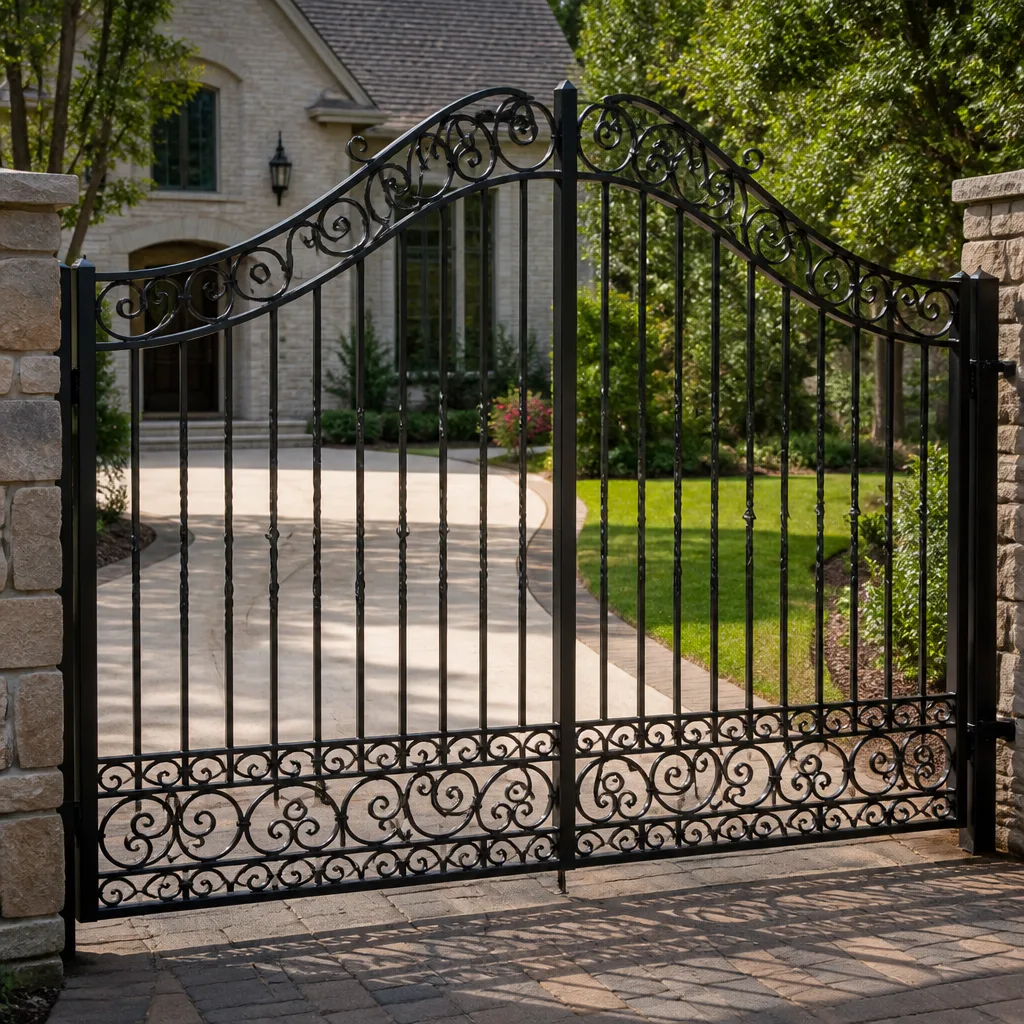 Wrought iron
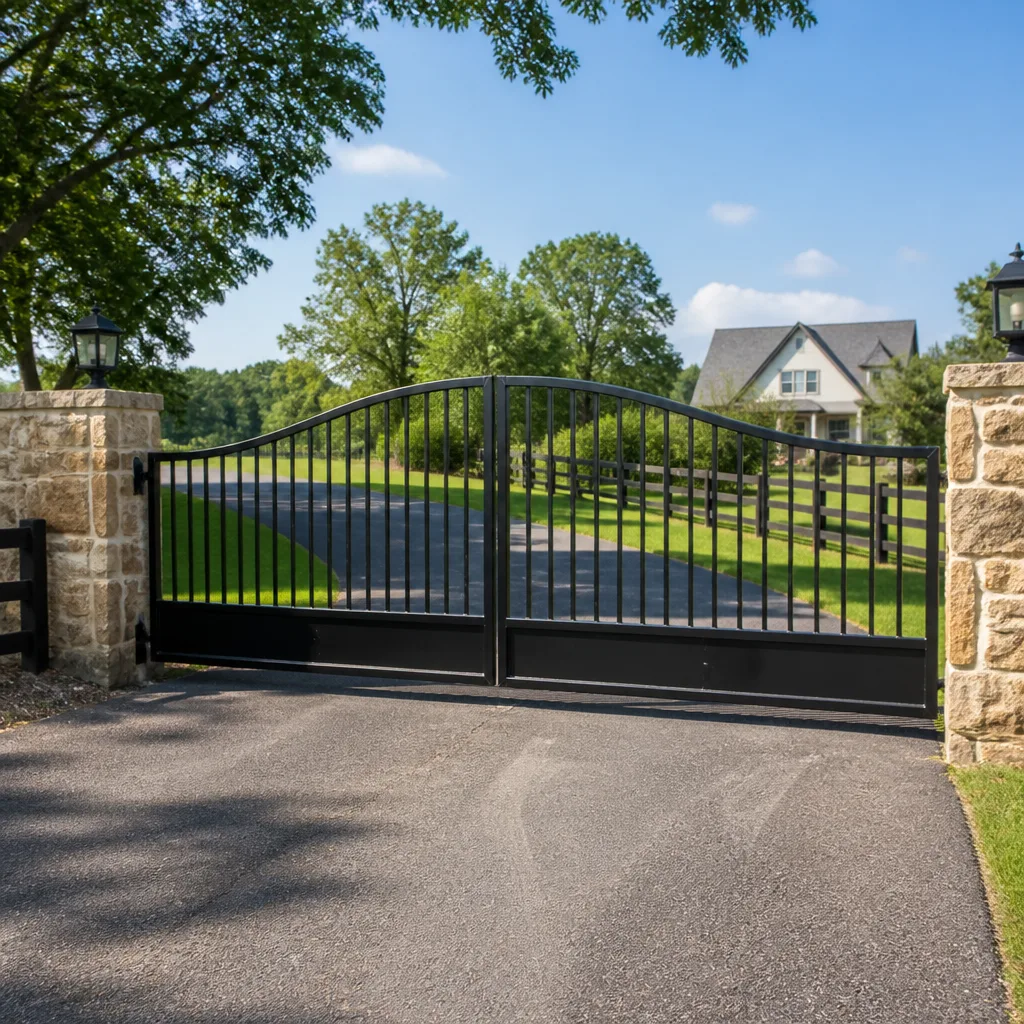 Farm & ranch
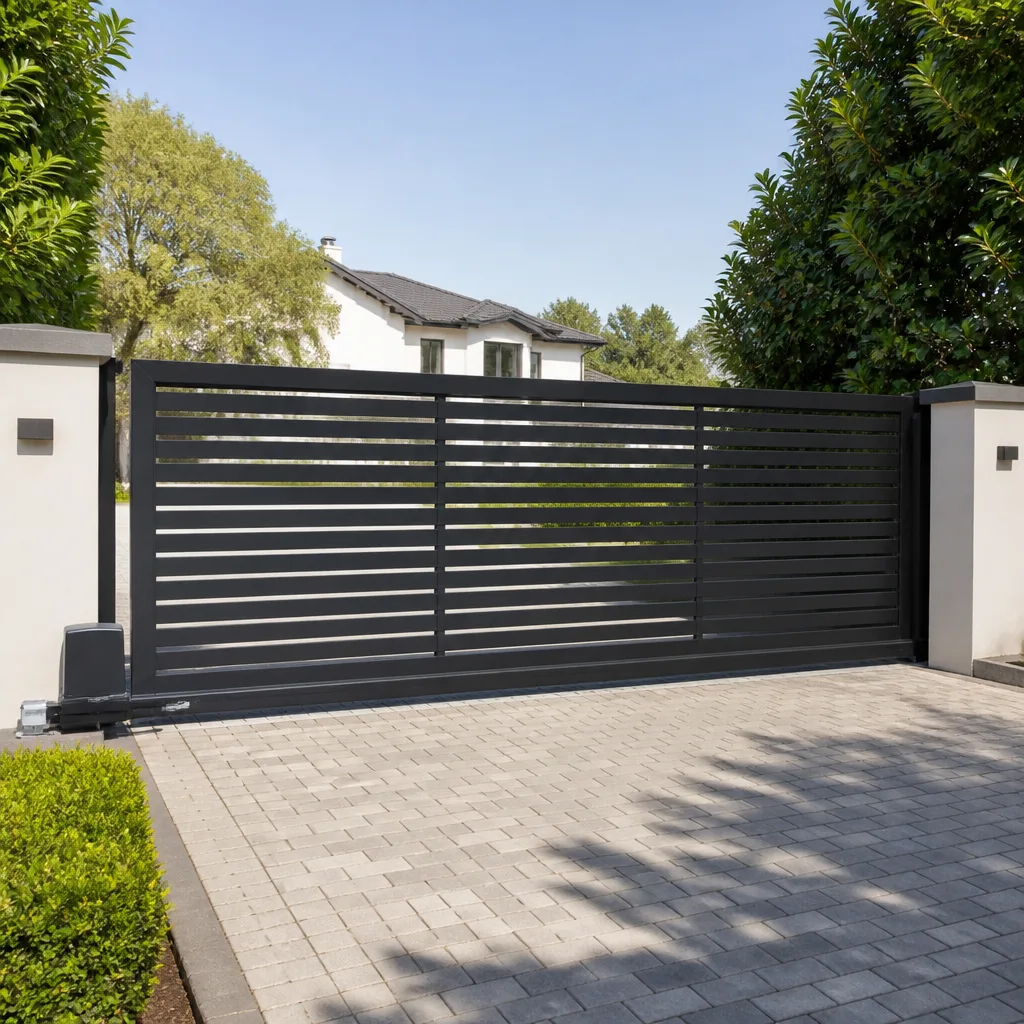 Sliding driveway gates
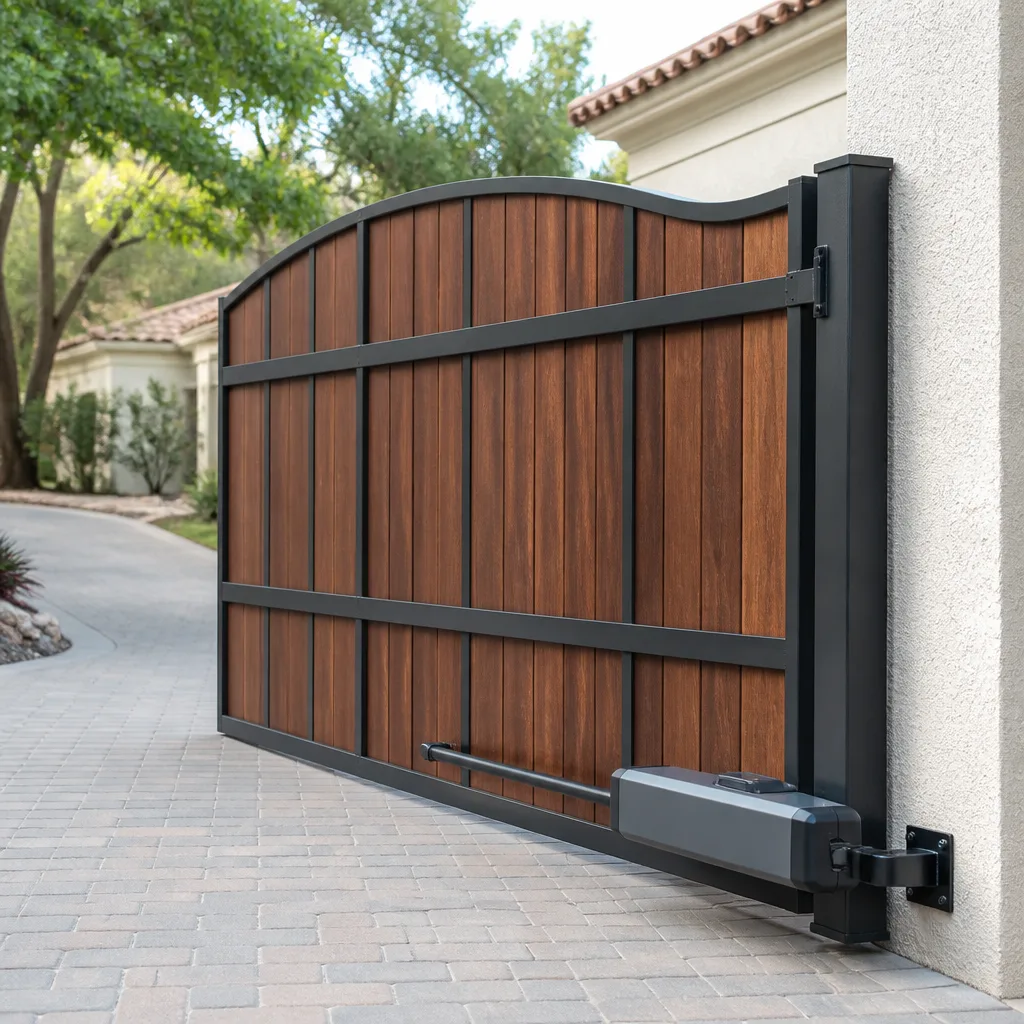 LiftMaster operators
Free on-site gate assessment - hinges, posts, and your LiftMaster or Nice gate operator checked before anything is quoted
The assessment is free and the quote is the invoice.
Get your free estimateSeasonal Gate Repair Care for Woodland Hills: Year-Round Homeowner’s Guide
Here’s a pattern we see every fall: a Woodland Hills homeowner calls about a gate motor that worked fine all summer, and now it won’t open. The failure isn’t usually the motor itself. It’s the fine dust and leaf debris that spent June through September packing itself into the motor housing, the limit switches, and the gear tracks. October’s first heavy use after months of heat and Santa Ana dry spells is when that accumulated grit finally wins. This guide breaks down the four stress periods a Woodland Hills gate actually goes through each year, what to check during each one, and what a homeowner can handle versus what needs a Gate Repair technician. By the end, you’ll have a month-by-month calendar specific to the West San Fernando Valley climate, not generic Southern California advice.
Styles & brands we work with
Quick Answer
Seasonal gate care in Woodland Hills means preparing for four stress periods: pre-Santa Ana debris buildup (August – September), winter rain and clay soil expansion (December – February), post-rain realignment checks (March – April), and summer heat load on operators and batteries (June – August). A homeowner can handle cleaning, lubrication, and visual checks in about 20 minutes per season. Realignment, limit switch adjustment, and motor diagnostics should go to a gate technician. For more guides & resources on seasonal maintenance, see our blog.
Table of Contents
- The Four Stress Periods That Actually Matter in Woodland Hills
- Pre-Santa Ana Prep: August to September
- Winter Rain, Clay Soil, and Gate Post Footings
- Spring Inspection Priorities After Soil Expansion
- Summer Heat: Hydraulic Operators, Batteries, and Finishes
- Month-by-Month Task Calendar for Woodland Hills Homeowners
- Common Mistakes to Avoid
- When to Call a Professional
- Frequently Asked Questions
- The Bottom Line
The Four Stress Periods That Actually Matter in Woodland Hills
Woodland Hills doesn’t get four seasons in the traditional sense. What it gets is four distinct stress cycles that push gate systems in different directions. Understanding these cycles matters because the repair call you make in November usually traces back to conditions that started in July.
The four stress periods are:
- Pre-Santa Ana season (August – September): Dry heat, fine dust, and accumulated debris from a full summer.
- Winter rainy season (December – February): Saturated clay soil around gate posts, rust-promoting moisture, and intermittent heavy use during storms.
- Post-rain realignment window (March – April): Soil expansion and contraction leaving gates slightly out of plumb or misaligned.
- Summer heat load (June – August): Hydraulic fluid stress, battery degradation, and finish wear from UV exposure.
Each period produces a signature failure type. The August – September window creates debris-related motor failures that show up in October. The winter rains create post shift and hinge binding. March and April are when a gate that “worked fine a month ago” starts scraping or lagging. And the summer heat shortens the life of batteries and hydraulic components that were already marginal.
What this means for a Woodland Hills homeowner is simple: the most effective maintenance calendar is not January-through-December. It’s built around these four windows. If you do the right prep in the right window, you avoid the repair call that follows.
For a full overview of what gate repair involves in this area, see Gate Repair in Woodland Hills. For context on how installation quality affects long-term maintenance, start with our Carver Gate Repair Woodland Hills home page.
Pre-Santa Ana Prep: August to September
The most repair calls we get in October trace back to debris accumulation during the preceding dry months. The West San Fernando Valley gets months of near-zero rain from late spring through early fall. Every tree drop, leaf fragment, and fine dust particle that lands on or near a gate system stays there. Wind pushes it into the motor housing, the gear track, the limit switch housing, and the chain drive if the gate uses one.
The failure mode is straightforward. Fine grit works its way into the limit switches, which are the components that tell the motor where to stop. When grit interferes with those contacts, the gate either doesn’t stop where it should or doesn’t start at all. The motor itself may be fine, but the control signal isn’t reaching it cleanly.
Pre-Santa Ana prep tasks for Woodland Hills homeowners:
- Clean the motor housing exterior every two weeks during August and September. Use a dry brush or compressed air, not water. Water pushed into the housing creates a different problem.
- Check the gear track and chain (if applicable) for packed debris. A stiff brush clears most of it. Anything adhered needs a scraper.
- Inspect the limit switch area for visible grit or cobwebs. Spiders love gate motor housings. Their webs trap dust and hold it against electrical contacts.
- Trim vegetation back from the gate’s swing or slide path. Dry brush touching the gate adds resistance and scratches the finish.
- Test the gate through three full open-close cycles. Listen for grinding, hesitation, or any change in motor pitch from earlier in the summer.
The mistake homeowners make here is waiting until the first Santa Ana wind event to check the gate. By then, the debris has already been packed deeper into the housing by the wind itself. The prep window is August to September, before the winds arrive, not during October when damage is already done.
If the gate hesitates during a cycle or the motor sounds different, don’t ignore it. A limit switch that’s partly fouled will fail completely at the worst possible time, which in Woodland Hills is usually the first wet, windy night of late fall. Our technicians work on LiftMaster, FAAC, BFT, and other major brands, so the diagnostic process follows the system already installed. Details on motor-specific diagnostics are on the Gate Motor Repair in Woodland Hills page.
Winter Rain, Clay Soil, and Gate Post Footings
Woodland Hills sits on soil with a significant clay content. Clay expands when wet and contracts when dry. A gate post set in concrete that’s surrounded by clay soil behaves differently in January than it does in July. The saturated winter soil pushes laterally against the footing, and over repeated wet-dry cycles, posts can shift.
The shift is usually small, measured in fractions of an inch. That’s enough. A post that moves 1/4 inch out of plumb changes the gate’s swing arc. The gate starts scraping the ground near the latch, or the hinges bind, or the motor works harder against the resistance. None of these show up as a dramatic failure. They show up as a gate that’s gradually harder to open, noisier, or slower to respond.
Early warning signs of footing shift during the Woodland Hills rainy season:
- The gate scrapes or drags in one section of its swing path during or after rain.
- The gap between the gate and the latch post changes visibly from dry season to wet season.
- The gate sits visibly lower on one side, even by a small amount.
- Hinge bolts appear to be under stress, with paint or powder coat cracking around them.
- The gate stays open or closed with resistance, where it previously floated smoothly.
For a homeowner, the important action is watching during and after significant rain. A gate that scrapes in January may not scrape by April, but the underlying post shift does not self-correct. The soil expands and contracts, but a shifted post stays shifted. The repair is not a homeowner job. It requires digging, resetting the post, repouring concrete, and allowing proper cure time before the gate is re-hung. Attempting to shim or adjust around a shifted post just moves stress to the motor and hinges.
This is also the season where the combination of moisture and temperature fluctuation affects exposed metal parts. Hinges, chains, and tracks that were dry all summer now cycle through damp and dry repeatedly. Surface rust forms quickly. A light coat of appropriate lubricant on moving metal parts before the rains start reduces this substantially.
Spring Inspection Priorities After Soil Expansion
By March in Woodland Hills, the ground has gone through at least three to four months of intermittent saturation followed by dry spells. The soil has expanded, contracted, and expanded again. Gates that were hung in concrete footings have been pushed and pulled. The spring inspection is about measuring what moved and deciding what needs realignment versus what’s within normal tolerance.
The key measurements to check in March or April:
- Gate level across the top rail: Use a 4-foot level. A difference of more than 1/8 inch across the gate width indicates post shift or hinge wear.
- Reveal gap at the latch side: Measure the gap between the gate and the latch post at top, middle, and bottom. If the three measurements differ by more than 1/4 inch, the gate is racked.
- Hinge pin wear: Open the gate halfway and lift it slightly. Any vertical play over 1/16 inch means hinge pins or bushings need replacement.
- Motor cycle time: Time the gate from fully closed to fully open. Compare to the manufacturer’s spec. A motor taking 20% longer than spec is compensating for resistance.
- Stop position accuracy: Mark where the gate stops in both open and closed positions. Watch three cycles. If the stop point drifts between cycles, the limit switches need attention.
What tolerance means in practice: a gate that scrapes in one spot is out of tolerance. A gate that sits 1/8 inch lower on one side but opens and closes without resistance is close to the edge. A gate with a 1/2 inch rack visible at the latch is failing.
Spring is also the correct time to check the gate’s finish for winter moisture damage. Look for paint bubbling, powder coat delamination, or rust starting at weld points and hardware. Woodland Hills’ dry summers are forgiving on finishes, but winter moisture that gets under the finish in spring will accelerate through the summer heat.
Realignment that requires re-hanging the gate or adjusting hinge mounting points is a technician job, not a homeowner job. Getting a gate rehung correctly involves supporting the gate’s full weight safely, which for most driveway gates is several hundred pounds. When a gate needs this kind of work, the process is part of what’s covered under Gate Installation in Woodland Hills service scope.
Summer Heat: Hydraulic Operators, Batteries, and Finishes
Woodland Hills regularly sees summer temperatures above 95°F, with stretches over 100°F. That heat works on gate systems in three specific ways.
Hydraulic operators: Many swing gates in Woodland Hills use hydraulic operators, particularly on heavier gates. Hydraulic fluid thins with heat. That changes the gate’s operating speed and can produce a lag or a jerk in the swing motion. On its own, a slight speed change in July heat is not a repair issue. What matters is whether the fluid level is correct. A hydraulic system that’s low on fluid overheats faster and accelerates seal wear. Checking hydraulic fluid level is a spring task, before the heat arrives, so the system enters summer at proper capacity.
Battery backup systems: Gate operators with battery backup are common in Woodland Hills, since many homes use automated driveway gates as a primary entry point and don’t want to be locked out during a Public Safety Power Shutoff. Summer heat shortens battery life. A battery that’s three years old and sitting in a motor housing that reaches 120°F in direct sun will degrade measurably faster than the same battery in a shaded mount. The specific failure sign is a gate that runs fine on AC power but moves slowly or not at all when the battery is the only power source. Testing the battery backup should happen in June, not after a power shutoff has already occurred.
Powder-coat and paint finishes: Summer UV in the San Fernando Valley is intense. Powder coat holds up well, but areas where the coating has been scratched, chipped, or worn thin will begin oxidizing underneath the finish. What starts as a small chip in May becomes a rust blister by August. Touching up chips and scratches in spring, before the UV and heat of June through August, extends the life of the finish measurably.
Which items need service versus monitoring:
- Service before summer: hydraulic fluid check, battery backup load test, touch-up of existing finish chips.
- Monitor through summer: gate speed changes on hot days, visible battery swelling or corrosion at terminals, new finish bubbling.
- No action needed: a gate that runs slightly slower on a 105°F day but returns to normal speed in the evening. That’s normal behavior for heat-thinned hydraulic fluid.
Mighty Mule and LiftMaster battery backup systems are the two we see most often on Woodland Hills residential gates. Both work fine in this climate. Both require the same thing: a shade mount where possible, and a replacement schedule that accounts for Valley heat. A battery that lasts five years in a coastal microclimate might last three years in Woodland Hills. Plan accordingly.
Month-by-Month Task Calendar for Woodland Hills Homeowners
This calendar is built for the West San Fernando Valley specifically, not Southern California generally. The timing reflects when the rain actually falls, when the heat actually peaks, and when the Santa Ana winds actually arrive in Woodland Hills.
January: After each significant rain event, check for gate scraping or dragging. Note any change in the latch gap. Clean leaves and debris from the gate track and motor housing area.
February: Inspect hinge hardware for new rust or stress cracks. Lubricate hinges and chain if applicable. This is the wettest month on average; moisture-related rust shows up now.
March: Perform the full spring inspection measurements described above: gate level, reveal gap at latch, hinge play, cycle time, and stop position accuracy. Note anything outside tolerance.
April: Schedule any realignment, hinge replacement, or limit switch adjustment identified in March. Complete touch-up painting or powder coat repair before the heat arrives. Check hydraulic fluid level on hydraulic operators.
May: Test the battery backup system by disconnecting AC power and running the gate through a full cycle. Replace any battery that’s sluggish or over three years old in direct sun mount.
June: Begin monitoring gate speed on hot days. Note whether the gate returns to normal speed when temperatures drop in the evening. Start the biweekly motor housing cleaning routine.
July: Continue biweekly cleaning. Check for finish bubbling or new rust spots. Monitor for any change in motor sound, particularly a higher pitch or grinding.
August: Begin the pre-Santa Ana prep tasks in full: motor housing cleaning, gear track cleaning, limit switch inspection, vegetation trimming, and three-cycle operational test.
September: Complete all pre-Santa Ana prep. Verify the gate operates correctly on battery backup. Have any motor noise or hesitation diagnosed before the fall and winter demand arrives.
October: After the first Santa Ana event, inspect the motor housing for newly packed debris and clean it out. Listen for any change in motor behavior after the event.
November: Perform a second lighter inspection before the holiday season, when gate use typically increases. Check the latch and lock operation. Confirm the gate opens and closes smoothly on the first cycle after sitting overnight.
December: Inspect drain paths around the gate posts. Make sure water from downspouts or driveway slope isn’t pooling at post footings. Standing water in clay soil is the fastest route to post shift in Woodland Hills.
Common Mistakes to Avoid
- Treating the gate motor as the only component that matters. The motor is rarely the first thing to fail. Limit switches, hinges, post footings, and battery backup systems all fail first, and each one sends stress back to the motor.
- Lubricating everything without knowing what kind. Different components need different lubricants. Spraying WD-40 on a chain that needs a dry lithium grease creates a dirt magnet. Wrong lubricant is worse than none in a dusty Woodland Hills summer.
- Waiting until October to check for Santa Ana prep. By October, the debris has already been packed into the housing by the first wind event. The prep window closes in September.
- Ignoring a gate that “scrapes a little” in January. Post shift does not self-correct. A gate that scrapes in January will still be scraping in June, and by then the motor has carried the stress for six months.
- Assuming battery backup works because it worked last year. Valley heat degrades batteries on a schedule. A battery that tested fine in May can fail by September. Test it seasonally, not annually.
- Using water to clean a motor housing. The dust that builds up in a Woodland Hills summer is fine and dry. Water turns it into mud inside the housing. Dry brushing or compressed air is the correct approach.
- Skipping the touch-up paint in spring. A chip that’s touched up in April is a ten-minute job. The same chip left through a Valley summer becomes a rust repair that requires stripping, sanding, and repainting.
When to Call a Professional
Some seasonal gate issues a homeowner can handle. Cleaning the motor housing, lubricating hinges, trimming vegetation, and testing the gate through cycles are all within reach. Other issues are not. Post resetting requires excavating, repouring concrete, and re-hanging a gate that weighs several hundred pounds. That’s not a DIY job. Read our DIY vs Professional Gate Repair: The Woodland Hills Homeowner’s Decision Guide for a full breakdown. Limit switch replacement involves working with live electrical components. Hydraulic fluid service requires the right fluid type and correct fill level, and getting either wrong damages the pump. If a gate motor is running hot, sparking, or making sounds it never made before, stop testing it and have it inspected. Carver Gate Repair Woodland Hills offers free estimates in Woodland Hills, and every repair comes with a written price before work starts. Call (650) 719-7207 to schedule.
Frequently Asked Questions
A Woodland Hills gate should get a full professional service once a year, ideally in spring after the winter rains, plus a homeowner-level cleaning and inspection every eight weeks during the dry season from June through October. The annual service catches post shift, hinge wear, and limit switch drift before they become failures.
Basic seasonal maintenance in Woodland Hills typically ranges from $95 to $180, which covers cleaning, lubrication, limit switch adjustment, and a full system inspection. Post resetting runs $400 to $1,200 depending on the post size and access. Motor replacement on a residential gate typically starts around $400 and can exceed $1,000 for higher-end LiftMaster or FAAC units. Call (650) 719-7207 for an exact quote, estimates are free.
Before wind season, clean the motor housing and gear track thoroughly, then check that the gate operates smoothly through a full cycle. During the wind event, listen for debris hitting the gate and check afterward for new material packed into the housing or track. If the gate hesitates or sounds different after a Santa Ana event, that’s a sign debris has entered where it shouldn’t. Call (650) 719-7207 for an inspection.
A gate that scrapes only in winter is almost always a sign of clay soil expansion pushing against the gate post footing. The saturated soil shifts the post slightly, changing the gate’s swing arc. When the soil dries in spring, the post may stay where it shifted, which means the scraping may continue even after the ground dries. This requires a professional post inspection, not just a gate adjustment. Call (650) 719-7207 to have it checked.
Our technicians service LiftMaster, FAAC, BFT, Linear, Viking, Ghost Controls, DoorKing, Elite, and Mighty Mule gate motors. If your system uses one of these brands, the parts and diagnostic approach are already matched to the equipment you have. Details are on the Gate Motor Repair in Woodland Hills page.
Yes, most gate repair and motor issues in Woodland Hills can be addressed same-day or next-day. Our phones are answered by a live person 24/7, so you can call (650) 719-7207, describe the issue, and get a written price before any work starts. Every repair carries a written guarantee good for a full year from the date of service.
The Bottom Line
Woodland Hills gates don’t fail on a calendar schedule. They fail on a climate schedule: debris-packed motors in October, rain-shifted posts in January and February, misaligned gates in March, and heat-stressed batteries and hydraulics in July and August. Each failure type is preventable with the right prep at the right time. The homeowner-level work, cleaning, lubrication, trimming, and testing, takes about 20 minutes per season and prevents most of the expensive repairs. The technician-level work, post resetting, limit switch replacement, and hydraulic service, costs far less done proactively than as an emergency. Book the spring inspection, do the pre-Santa Ana prep in August, and test the battery before summer. That’s the whole strategy.
Ready to get your Woodland Hills gate on a seasonal maintenance schedule? Call Carver Gate Repair Woodland Hills at (650) 719-7207 for a free estimate. We answer live, 24/7, and every repair comes with a written price and a written guarantee good for a full year.
Written by Lonnie Burke, Owner at Carver Gate Repair Woodland Hills, serving Woodland Hills since 2008.
See the difference
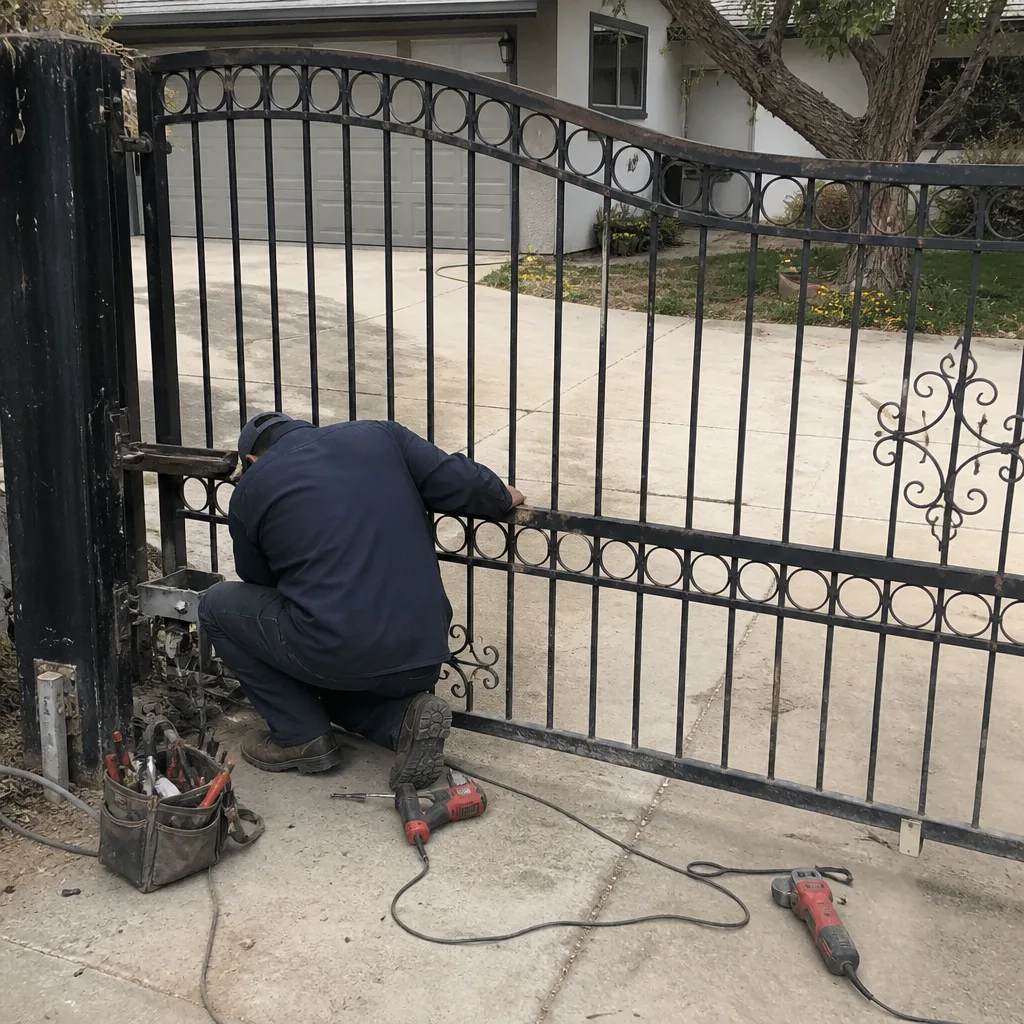 Before
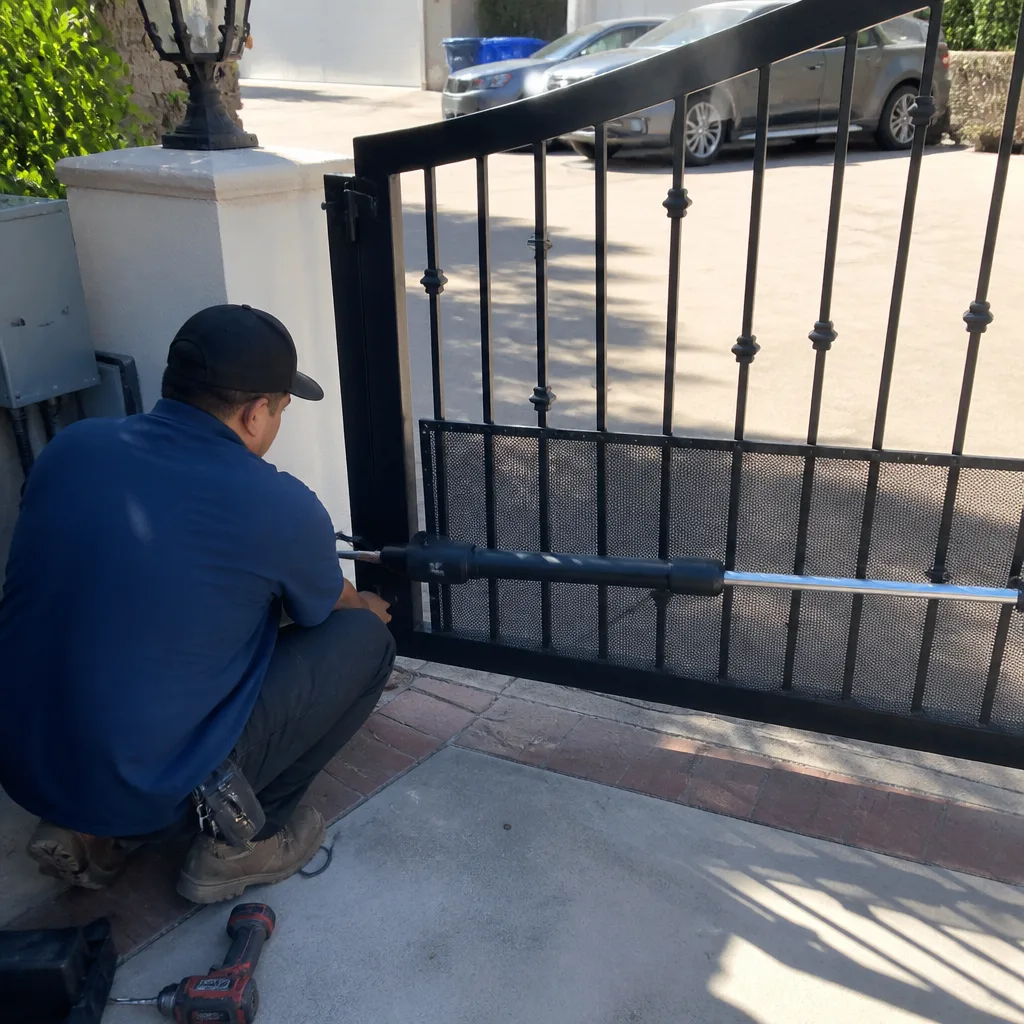 After
After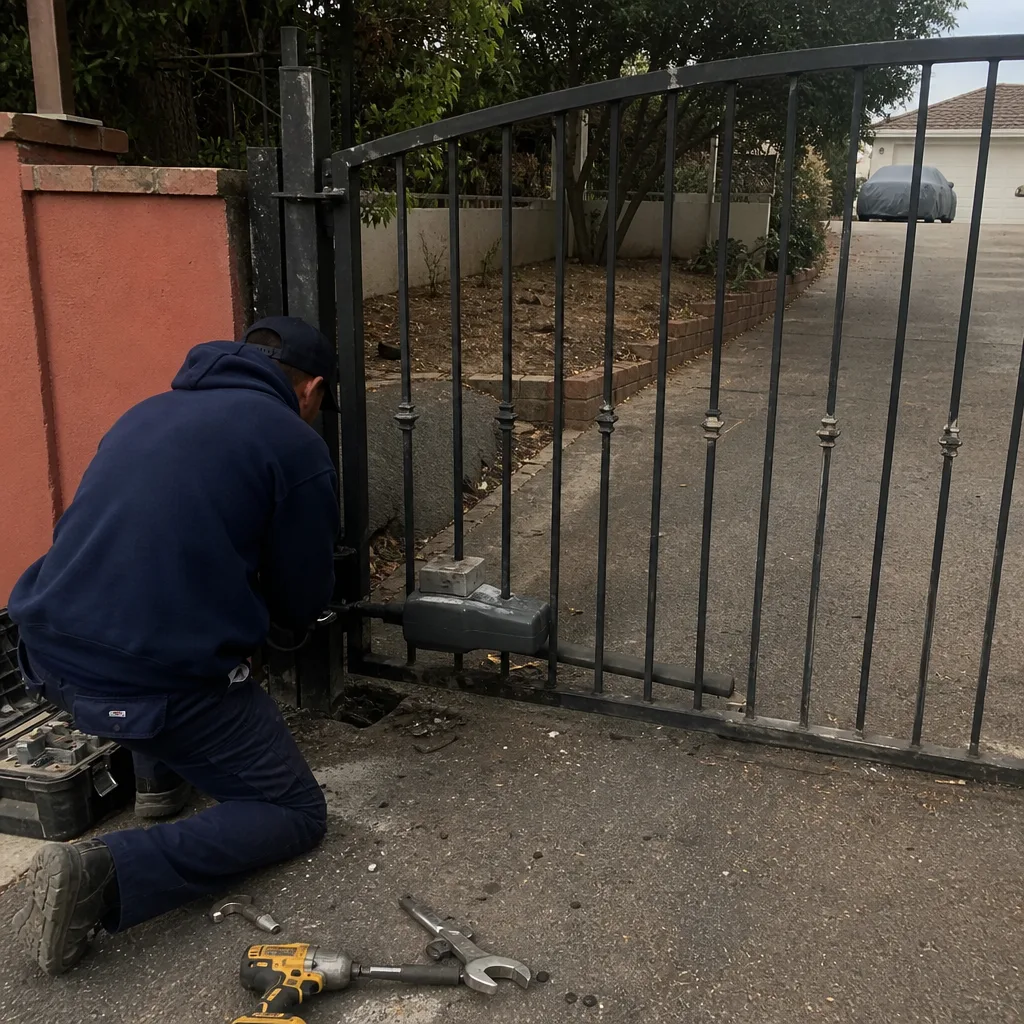 Before
 After
After Before
 After
After