
Last updated October 16, 2026
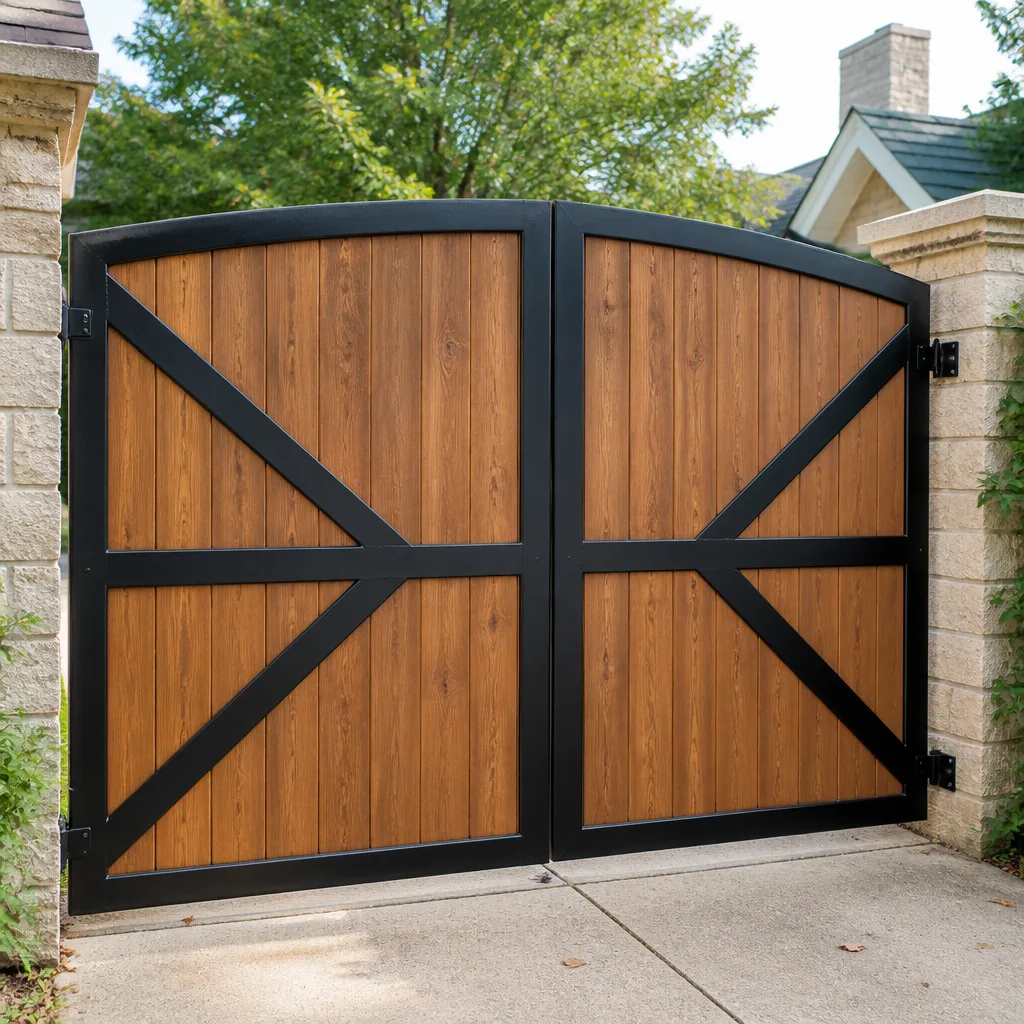 Wood & steel frame
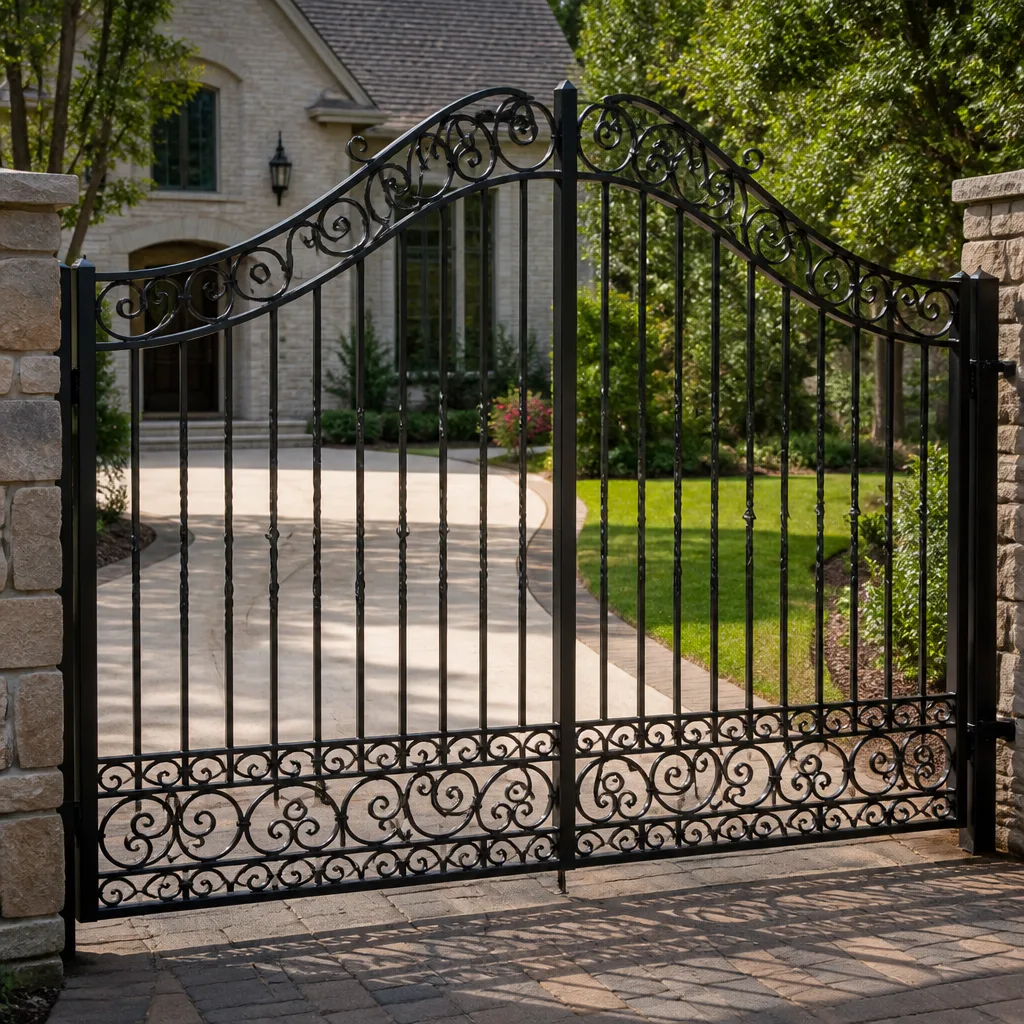 Wrought iron
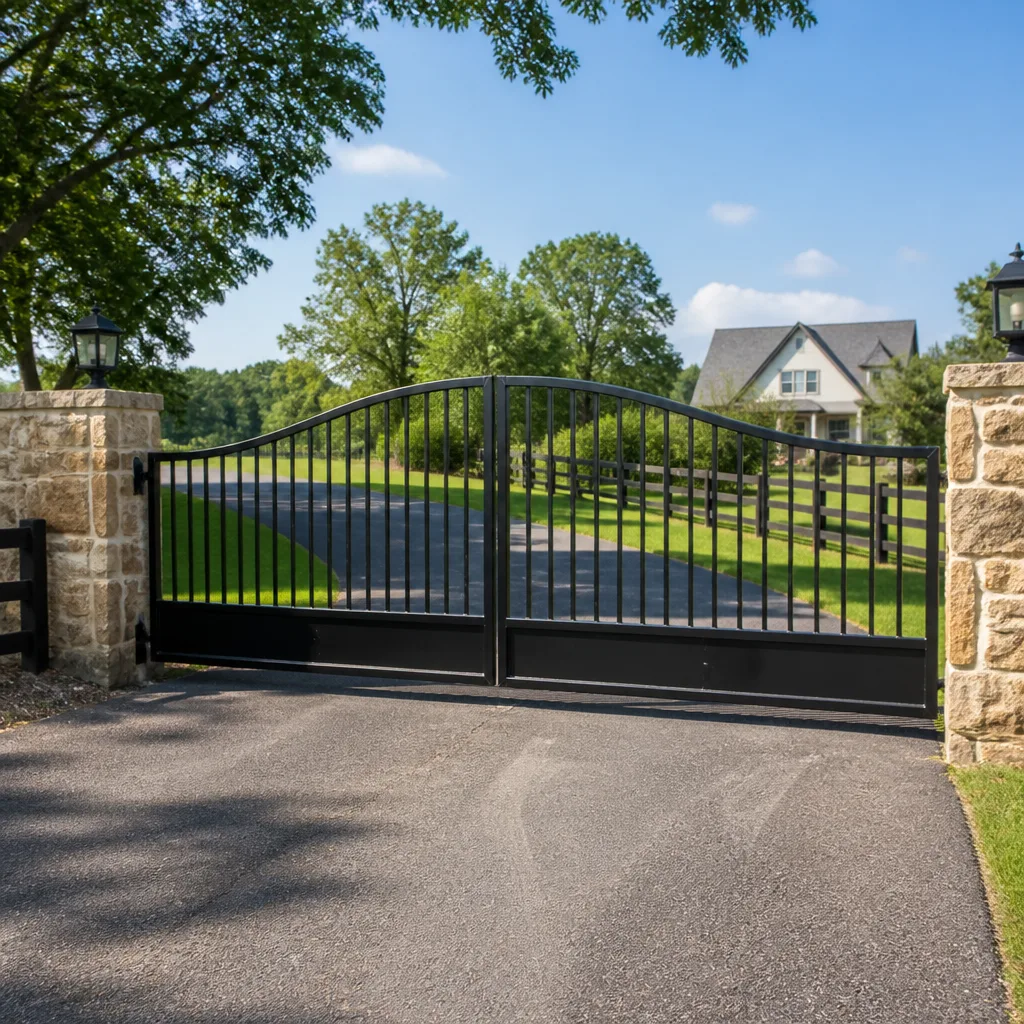 Farm & ranch
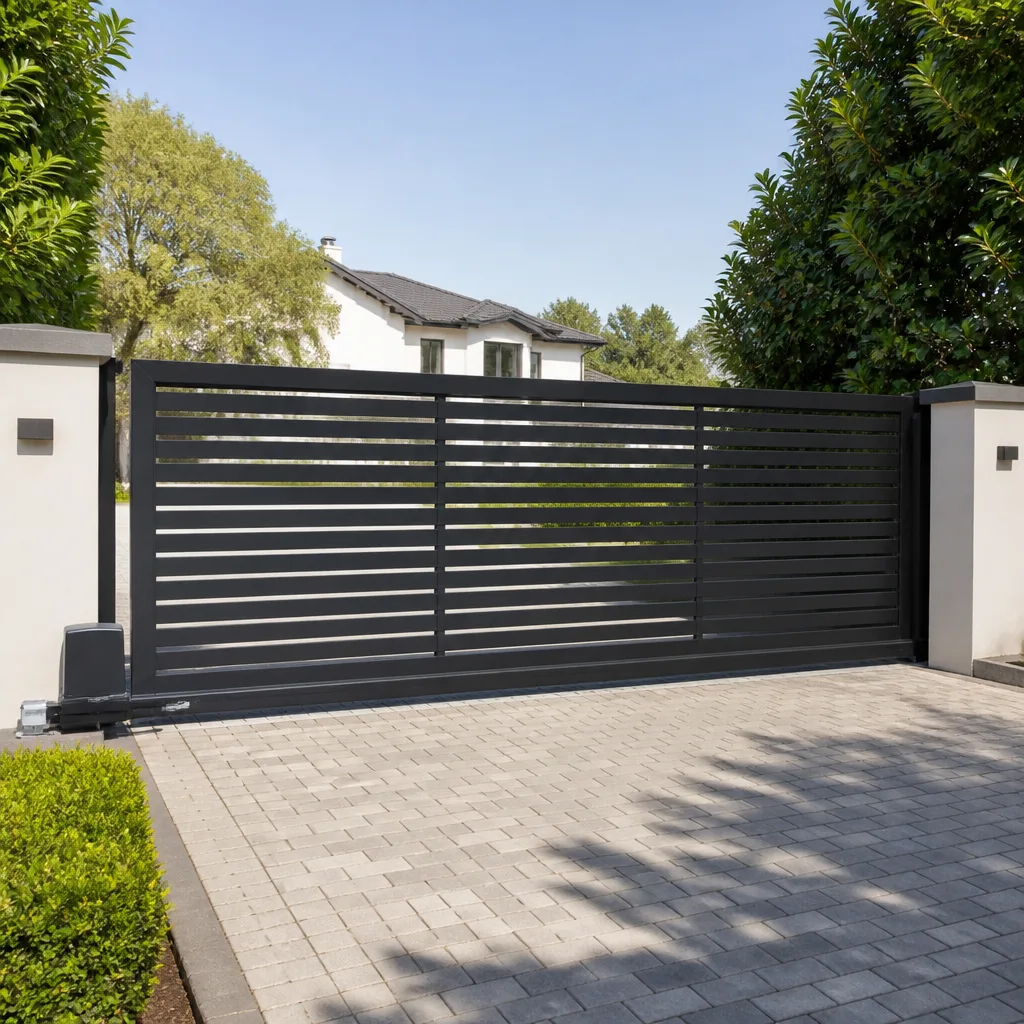 Sliding driveway gates
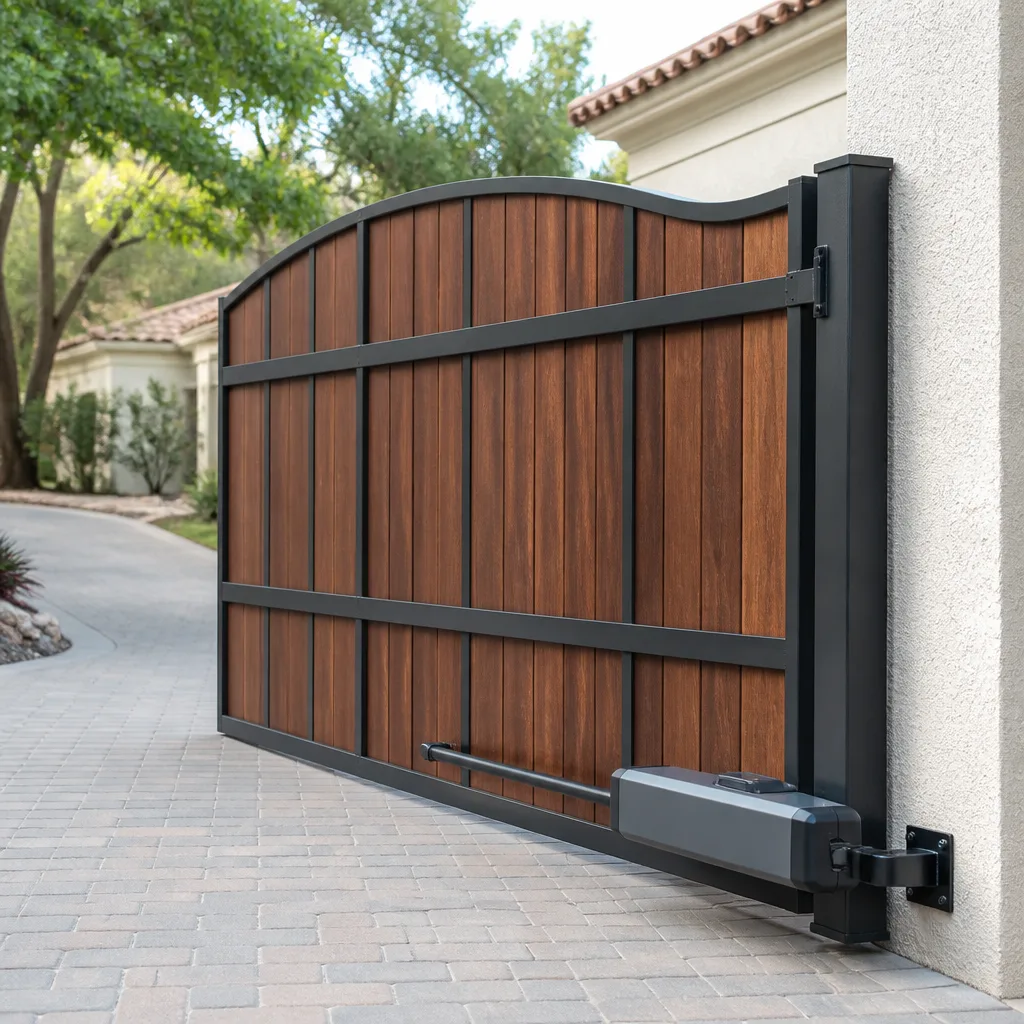 LiftMaster operators
Free on-site gate assessment - hinges, posts, and your LiftMaster or Nice gate operator checked before anything is quoted
The assessment is free and the quote is the invoice.
Get your free estimateDIY vs Professional Gate Repair: The Woodland Hills Homeowner’s Decision Guide
Replacing a gate wheel is a legitimate DIY job. Adjusting the open-force limit on an automated operator without a current UL 325 safety check is a liability that doesn’t appear until the gate pins someone against a post. That distinction, between a repair with a defined failure mode that’s cheap to fix if you get it wrong, and one that creates compounding damage or safety exposure if done incorrectly, is the entire decision. This guide walks through which gate repairs a Woodland Hills homeowner can reasonably handle, which ones need a technician, what the real cost difference is, and where the line is drawn by code, warranty language, and the physics of a moving gate.
Styles & brands we work with
Quick Answer
Most mechanical repairs on manual gates, like replacing a wheel, hinge, or latch, are DIY-appropriate for a homeowner with basic tools and patience. Any repair that touches the motor, limits, force settings, safety sensors, or wiring on an automated gate should be handled by a trained technician because of UL 325 safety requirements, warranty implications, and the risk of compounding damage. In Woodland Hills, DIY parts typically cost $25 to $150, while professional repair runs $150 to $450 depending on the component and the operator brand.
Table of Contents
- Repairs That Are DIY-Appropriate and Why
- Repairs That Require a Technician and Why
- The UL 325 Standard Explained for Homeowners
- Tools Required for Legitimate DIY Gate Repair
- How a Failed DIY Repair Affects Operator Warranty
- The Real Cost Comparison: Parts-Only vs Warranted Repair
- Woodland Hills Specifics: Climate, Codes, and Market Realities
- Common Mistakes to Avoid
- When to Call a Professional
- Frequently Asked Questions
- The Bottom Line
Repairs That Are DIY-Appropriate and Why
The defining feature of a DIY-appropriate gate repair is a failure mode that stops at the part itself. If the worst outcome of doing it wrong is that the part still doesn’t work and you replace it again, you’re in safe territory. If the worst outcome is a gate that slams, a motor that burns out, or a panel that falls on someone, you’re not.
Here is the list of repairs we tell Woodland Hills homeowners they can reasonably take on, with the specific conditions attached to each.
1. Gate wheel and roller replacement
Slide gates ride on steel or nylon wheels that wear down over time. In Woodland Hills, the fine dust from the hills and the dry season accelerates wheel wear on gates that sit near unpaved shoulders. Replacing a wheel is a mechanical job: unbolt the old wheel, bolt in the new one, check that the gate sits level. The risk is low. If you install the wrong diameter wheel, the gate drags or sits crooked, and you’ll see it immediately. The fix is buying the correct wheel. We see this repair done successfully by homeowners all the time.
2. Hinge lubrication and replacement on manual swing gates
A squeaking swing gate hinge is a maintenance item, not a repair emergency. Removing the hinge pin, cleaning it, greasing it, and reinstalling it takes under an hour. If the hinge itself is bent or the pin is seized beyond cleaning, replacing a standard strap hinge or barrel hinge on a wooden gate is within reach for someone who can drill straight and use a level. The failure mode is visible: the gate sags, scrapes, or won’t close. None of these outcomes damage anything except the hinge itself.
3. Latch and lock replacement
Gate latches fail from weather exposure, and Woodland Hills gets enough morning marine layer and afternoon sun cycling to corrode cheap zinc hardware inside a few seasons. Replacing a gravity latch, spring latch, or padlock hasp is straightforward. The gate either latches or it doesn’t. No hidden damage accumulates.
4. Post cap and trim hardware replacement
Gate post caps crack from sun exposure. Trim bolts rust. These are cosmetic and mechanical, with no safety function. If you can operate a wrench, you can do this.
The common thread here is this: these components fail in isolation. They don’t communicate with the operator, they don’t carry gate weight in a way that endangers anyone if installed slightly imperfectly, and they don’t require specialized calibration. If you replace a wheel and it’s not perfect, the gate still moves. You see the problem and fix it.
Repairs That Require a Technician and Why
Now the other side of the ledger. These repairs carry either a safety obligation, a compounding-damage risk, or a warranty consequence. The classification is not about skill level. It’s about what happens when the repair is slightly wrong.
1. Any adjustment to force, speed, or travel limits on an automated operator
Every automated gate operator sold in the United States is governed by UL 325, the safety standard for automatic gate systems. That standard requires the operator to reverse or stop when it encounters a certain threshold of resistance, and it requires the installer or repair technician to verify this with a specific test after any change to force or speed settings. Here is what most homeowners do not know: adjusting the force dial on a LiftMaster or FAAC board also changes the entrapment protection threshold. A gate set too strong will not reverse when it should. A gate set too weak will stall on its track and burn the motor. Both outcomes are invisible until something fails. This is the single most common repair we see done wrong in Woodland Hills, and it’s the one that can hurt someone.
2. Motor, capacitor, or control board replacement
Replacing a gate motor means matching voltage, amperage, duty cycle, and mounting geometry to the existing operator. A homeowner who buys a motor online and bolts it in without verifying the capacitor rating or the limit switch wiring has created a door-sized machine with uncalibrated entrapment protection. Control boards are worse: a BFT or Linear board has multiple terminals for safety edges, loop detectors, and photo eyes. One misplaced wire and the safety devices are bypassed silently. The gate still opens and closes. It just won’t stop when a child is in the way.
3. Safety edge, photo eye, or loop detector repair or replacement
These are the devices that tell the operator to stop or reverse. They are also the devices that fail quietly. A homeowner can replace a photo eye and wire it in, but without a UL 325 test afterward, there is no way to know whether the system actually reverses under obstruction conditions. In our experience, this is where failed DIY repairs turn into a second service call, and sometimes into a damaged gate panel or a burned operator.
4. Spring replacement on cantilever or heavy slide gates
Some slide gates use tension springs to assist movement. Others use counterweights. In both cases, the stored energy is significant. If you unbolt a spring under tension without the correct clamping procedure, the released energy can break a hand or send a bracket through a fence. This is not a gate wheel. This is the equivalent of working on a garage door torsion spring, which is why even experienced general contractors decline it.
5. Post or foundation repair
If a gate post is leaning, the fix usually involves excavation, concrete work, and re-hanging the gate to the new post position. In Woodland Hills, the expansive clay soil in neighborhoods like Walnut Acres and south of the Boulevard shifts with the wet-dry cycle, which is why leaning posts are common. The gate itself might be fine. The post is the problem. This job requires digging, bracing, concrete, and setting the gate so the operator travel limits don’t have to be reprogrammed. It’s a full professional job, not a weekend repair.
The UL 325 Standard Explained for Homeowners
UL 325 is the reason the DIY-versus-professional line exists for automated gates. It is not a suggestion, a guideline, or a best practice. It is the safety standard that gate operators are tested to, and it has specific requirements for what must happen after any repair that involves the operator, the wiring, or the safety devices.
Here is what the standard requires in plain terms:
- Entrapment protection: Every automated gate must have at least two independent means of entrapment protection. This typically means a combination of a reversing mechanism on the motor and a physical device like photo eyes or a safety edge.
- Force testing: After any adjustment to force, speed, or travel, the operator must be tested with a force gauge to confirm the gate reverses within the specified threshold. The test is done with a specific instrument, at multiple points along the gate’s travel.
- Documentation: The test results are supposed to be documented. If a homeowner does the work, there is no documentation, and if an incident occurs, the absence of documentation is a problem.
- Warning signage: Automated gates require specific warning signs posted on both sides. This is the part most homeowners ignore entirely.
Here is the practical reality for a Woodland Hills homeowner: you can adjust the force limiter on a LiftMaster or FAAC operator with a screwdriver in five minutes. What you cannot do without a force gauge is verify that the gate now reverses at the correct obstruction threshold. The gate will open and close. It will look fine. It will not be fine. If it pins someone, the question will not be whether you meant well. The question will be whether the system met UL 325 after your adjustment. It did not.
This is also the context for our Gate Motor Repair in Woodland Hills work: every motor repair includes the safety test, the documentation, and the warning signage check. It’s not an add-on. It’s the repair.
Tools Required for Legitimate DIY Gate Repair
A generic toolkit does not cut it for gate work. Here is the specific list of tools we would expect a homeowner to own before attempting any of the DIY-appropriate repairs listed above. If you do not own these, the cost of buying them often erases the savings of doing the work yourself.
- Torque wrench for tightening hinge bolts and wheel axles to manufacturer spec. Over-torquing a wheel axle is a common cause of premature bearing failure.
- Four-foot level for confirming the gate sits true after wheel or hinge replacement. A gate that’s off-level by half an inch wears wheels unevenly and eventually binds on the track.
- Dead-blow hammer for seating hinge pins and nudging gate panels without denting steel or splitting wood.
- Quality grease (white lithium or marine-grade) for hinge and wheel lubrication. WD-40 is a solvent, not a lubricant. It makes a hinge feel free for a week and then leaves it dry.
- A multimeter if you’re touching any wiring at all, even a 12-volt photo eye. A $40 meter tells you whether the circuit is live, open, or shorted before you screw something up.
- Replacement hardware in the correct grade: galvanized or stainless fasteners for exterior use. The zinc-plated bolts from the hardware store aisle rust in one Woodland Hills rainy season.
If any repair you’re considering requires tools beyond this list, that’s a signal. A force gauge for UL 325 testing costs between $300 and $600 for an entry-level unit. A homeowner doing one motor adjustment will never recoup that. A technician uses it on every job. That tool gap is one of the clearest lines between DIY and professional work.
How a Failed DIY Repair Affects Operator Warranty
Gate operator manufacturers write their warranties for professional installation and service. Read the warranty card on a LiftMaster, FAAC, BFT, or Linear operator and you’ll find language that voids coverage for damage caused by unauthorized modification, improper adjustment, or installation not in accordance with UL 325.
Here is how that actually plays out in a homeowner’s favor or against it:
- If a professional technician installs or repairs the operator: The work is documented. If the board fails six months later from a manufacturing defect, the warranty claim has a paper trail. The manufacturer can verify installation and service history.
- If a homeowner replaces a board and the operator fails: The manufacturer asks for service records. There are none. The burden is on the homeowner to prove the failure was not related to the installation. Most homeowners cannot meet that burden. The claim is denied.
- If a homeowner adjusts force limits and the operator burns out: The manufacturer inspects the operator, sees the force dial cranked, and denies the claim on the grounds of improper adjustment. This is not a hypothetical. This is a pattern.
What most people do not realize is that the warranty on the operator is separate from the warranty on the repair. If a professional repair fails within the warranty period, the repair company returns and fixes it at no charge. That’s the entire purpose of a written repair guarantee. If a DIY repair fails, the homeowner buys the part twice, and now pays a technician to fix both the original problem and the damage from the DIY attempt.
The Carver Gate Repair Woodland Hills home page and our service pages all describe the same standard: a written price before work starts, and a written guarantee on every repair, good for a full year. That guarantee is the financial mechanism that makes professional repair the cheaper option when the DIY attempt misses the root cause. The homeowner is not paying for the repair. They’re paying for the repair plus the guarantee that it’s actually fixed.
The Real Cost Comparison: Parts-Only vs Warranted Repair
The parts-only cost of a gate repair always looks cheaper than the professional quote. A replacement wheel costs $25 to $45 online. A professional wheel replacement in Woodland Hills runs $150 to $200 including the part, the labor, the trip, and the check of the rest of the gate. See our Gate Repair Cost Breakdown: The Woodland Hills Homeowner’s Reference for 2026 for full pricing details. The math seems obvious until you account for the probability of a second call.
Here is the honest breakdown we share with homeowners when they ask:
- DIY gate wheel replacement: $25 to $45 in parts, 1 to 2 hours of labor. Success rate on first attempt: high, assuming the correct wheel is purchased. Risk of compounding damage: low. Reasonable DIY job.
- DIY hinge replacement: $15 to $40 in parts, 1 to 3 hours. Success rate: moderate to high. Risk: low, assuming the gate is safely supported during the replacement. Reasonable DIY job.
- DIY force limit adjustment: $0 in parts, 10 minutes of labor. Success rate: low, because the visible outcome (gate opens and closes) does not confirm the invisible requirement (gate reverses at the correct force threshold). Risk: high. This is the repair that voids warranties and creates entrapment exposure.
- Professional operator repair with full UL 325 test: $250 to $450. Success rate: high, backed by a written one-year guarantee. Risk: transferred to the repair company, in writing.
The economic argument for professional work is not that the technician is doing something impossible. It’s that the professional repair includes the safety test, the documentation, the warranty, and the guarantee. Strip those out and the numbers shift toward DIY. But you cannot strip them out, because they are the part that matters when the repair involves a machine that moves several hundred pounds of steel.
For context on full replacement versus repair, our Gate Installation in Woodland Hills page covers when a gate is past the point of economical repair. The line is usually crossed when the frame is rusted through or the motor has failed for the second time.
Woodland Hills Specifics: Climate, Codes, and Market Realities
Woodland Hills is the hottest neighborhood in the San Fernando Valley, with summer temperatures regularly exceeding 100 degrees. That heat load does two things to gate hardware. First, it accelerates UV degradation on plastic components like photo eye housings, post caps, and operator covers. Second, it pushes gate motors into thermal overload, especially on slide gates that face west and catch the afternoon sun on their steel panels.
The dry season, from roughly June through November, contributes fine dust that coats rollers and chains. That dust, combined with the morning marine layer that pushes in from the coast, creates a grinding paste that accelerates wheel and track wear. Gates in Woodland Hills that are not lubricated at least twice a year wear their wheels out noticeably faster than identical gates in cooler, wetter climates. Our Gate Repair Maintenance Checklist for Woodland Hills Homeowners covers the full seasonal schedule.
The winter rains, when they come, do something else. The clay-heavy soil in much of the Valley expands and contracts with moisture. Gate posts that have been stable for a decade start leaning after a wet winter. The repair is not a shim behind the hinge. It’s excavation, concrete, and re-setting the post, which is a professional job every time.
For general gate issues, our Gate Repair in Woodland Hills page covers the range of services and what homeowners should expect on a service call. The important point for this guide is that Woodland Hills specifically creates more thermal, dust, and soil movement stress on gate hardware than most of Los Angeles, which means more repairs per year, and more repair decisions.
Common Mistakes to Avoid
- Adjusting the force dial to “fix” a gate that’s dragging. A gate that struggles to move usually has a mechanical problem: worn wheels, a failing capacitor, or track misalignment. Cranking the force up masks the symptom and puts the gate out of UL 325 compliance. The gate will fail harder later, and it won’t reverse when it should.
- Buying replacement parts by photo alone. Gate operators have model numbers, and models within the same brand use different boards, capacitors, and remotes. A part that looks identical to the old one can have different voltage or firmware. Buy by model number, not by appearance.
- Using interior-grade fasteners on exterior gate hardware. The bright zinc bolts from the local hardware store look fine for a season and then rust-stain the gate panel. Exterior gate hardware requires galvanized or stainless fasteners. This is a $5 difference on a $200 repair.
- Skipping the gate support when replacing hinges or wheels. A 400-pound gate supported only by its remaining hardware is a crushing hazard. Block it, jack it, or brace it before you unbolt anything load-bearing.
- Testing an automated gate with your body in the path. After any DIY adjustment, homeowners test the gate by standing in the opening and seeing if it stops. Do not do this. The UL 325 test protocol exists specifically because the human body test is what it replaced.
- Ignoring the warning signage requirement. Automated gates in Los Angeles County are required to have specific warning signs on both sides. Most gates installed more than five years ago have faded or missing signage. It’s a $20 fix that closes a real liability gap.
- Assuming the gate is the problem when the post is leaning. In Woodland Hills, a gate that suddenly stops closing correctly is often a post that has moved in the expanding clay soil. The gate hardware is fine. The foundation is not. Replacing hardware on a gate that’s out of square wastes money.
When to Call a Professional
Call a professional when the repair involves the operator, the safety devices, the wiring, or a post that has moved. Call when the gate is heavy enough to hurt someone if it falls or slams. Call when you have already attempted a repair and the gate is still not functioning, because the second attempt is usually more expensive than the first service call would have been. In Woodland Hills, Carver Gate Repair offers free estimates on Gate Repair services and motor repairs, with a written price before any work starts. Call (650) 719-7207 and a live person answers, day or night.
Frequently Asked Questions
Yes, for mechanical repairs on manual gates like wheel, hinge, and latch replacement, provided the gate is properly blocked and supported. No, for any work on an automated operator, safety sensors, or stored-energy components like springs and counterweights, which require specialized tools and a UL 325 safety test after the repair.
There is no law preventing a homeowner from working on their own gate. However, automated gate operators are required to meet UL 325 entrapment protection standards, and any repair that changes force, speed, or travel limits creates a compliance obligation that most homeowners cannot meet without a force gauge and the correct test procedure.
Typical gate repair in Woodland Hills runs $150 to $450 depending on the component, the operator brand, and whether safety devices need replacement. Operator motor or board replacement runs $250 to $450. A written estimate is provided before any work starts, so the price does not move after the job is opened.
In most cases, yes, if the manufacturer determines that the failure was caused or contributed to by improper adjustment, unauthorized parts, or installation not performed to UL 325 standards. Manufacturers like LiftMaster, FAAC, BFT, and Linear all include language in their warranty terms excluding damage from non-professional service.
Adjusting the operator’s force or speed setting to compensate for a mechanical problem. The gate appears fixed, but the entrapment protection is now incorrect, the underlying mechanical issue continues to worsen, and the operator eventually fails under the added load.
Yes. The technicians are trained on LiftMaster, FAAC, BFT, Linear, Viking, Ghost Controls, DoorKing, Elite, and Mighty Mule equipment. The repair starts with identifying the operator model and matching the correct parts and calibration to that specific system. Call (650) 719-7207 for a free estimate in Woodland Hills.
The Bottom Line
The DIY-versus-professional decision is not about how handy you are. It’s about the failure mode of the specific repair. Mechanical components on manual gates fail in isolation, visibly, and cheaply when you get them wrong. That’s DIY territory. Automated gate components fail silently, carry safety obligations under UL 325, and void warranties when adjusted incorrectly. That’s professional territory. In Woodland Hills, where heat, dust, and clay soil stress gate hardware all year, the margin for error is tighter and the repair frequency is higher. Spend your effort on the repairs where a mistake costs you a second trip to the hardware store, not on the ones where a mistake costs you a burned motor, a denied warranty claim, or a gate that doesn’t stop when it should. For additional help, browse our more guides & resources.
Written by Lonnie Burke, Owner at Carver Gate Repair Woodland Hills, serving Woodland Hills since 2008.
See the difference
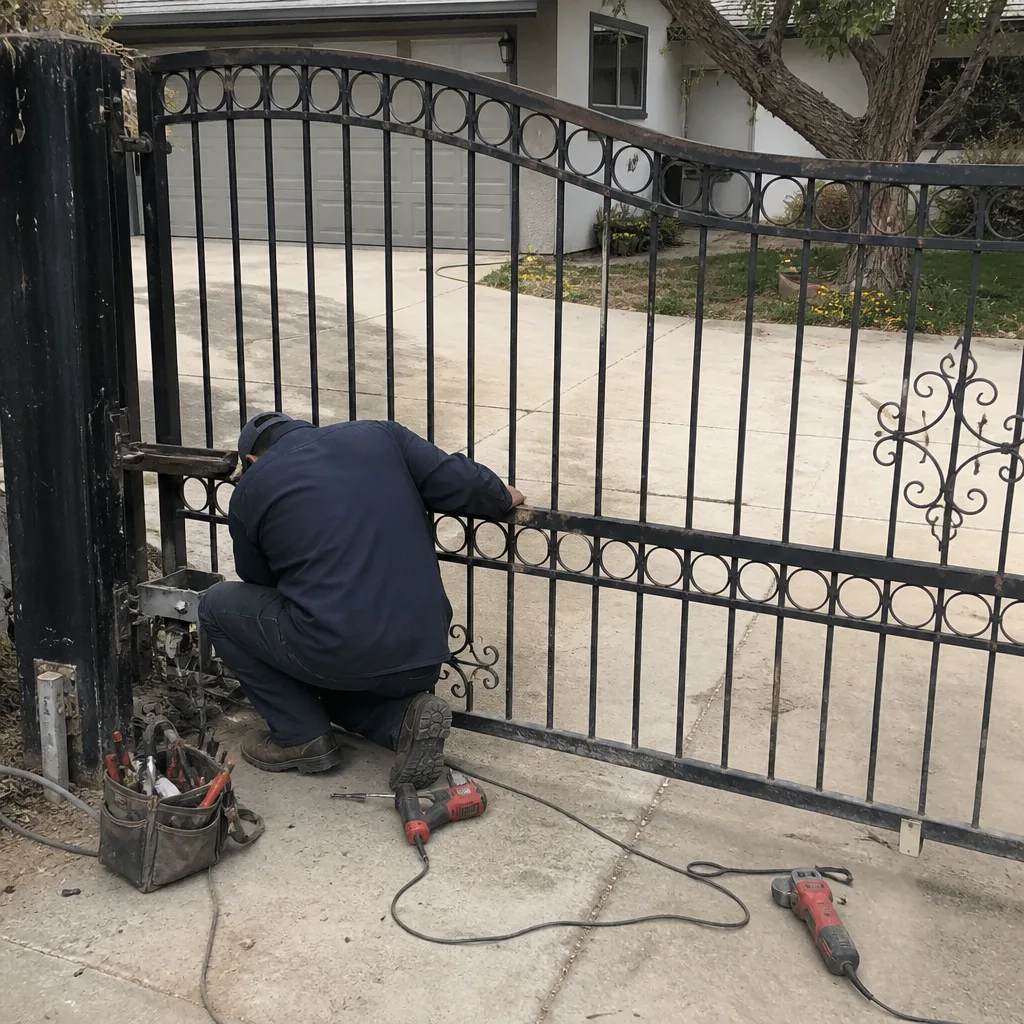 Before
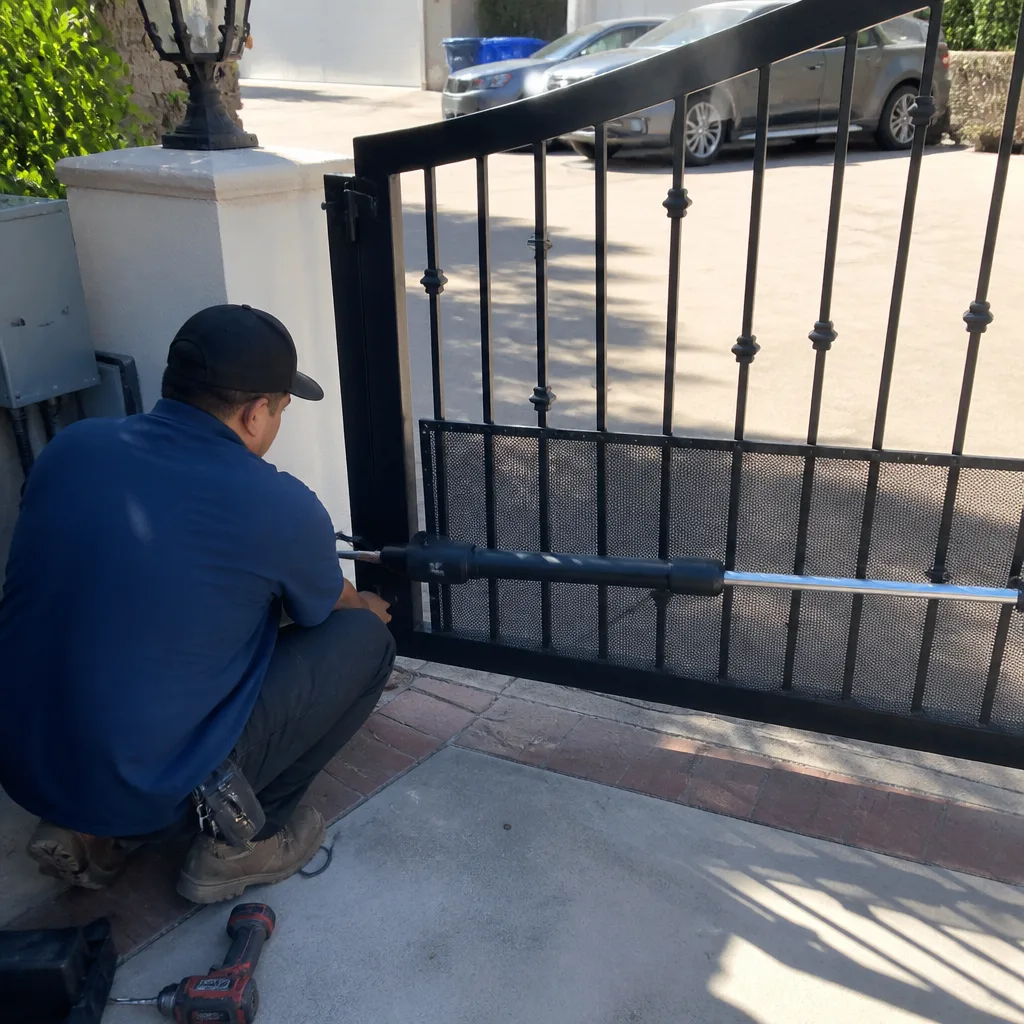 After
After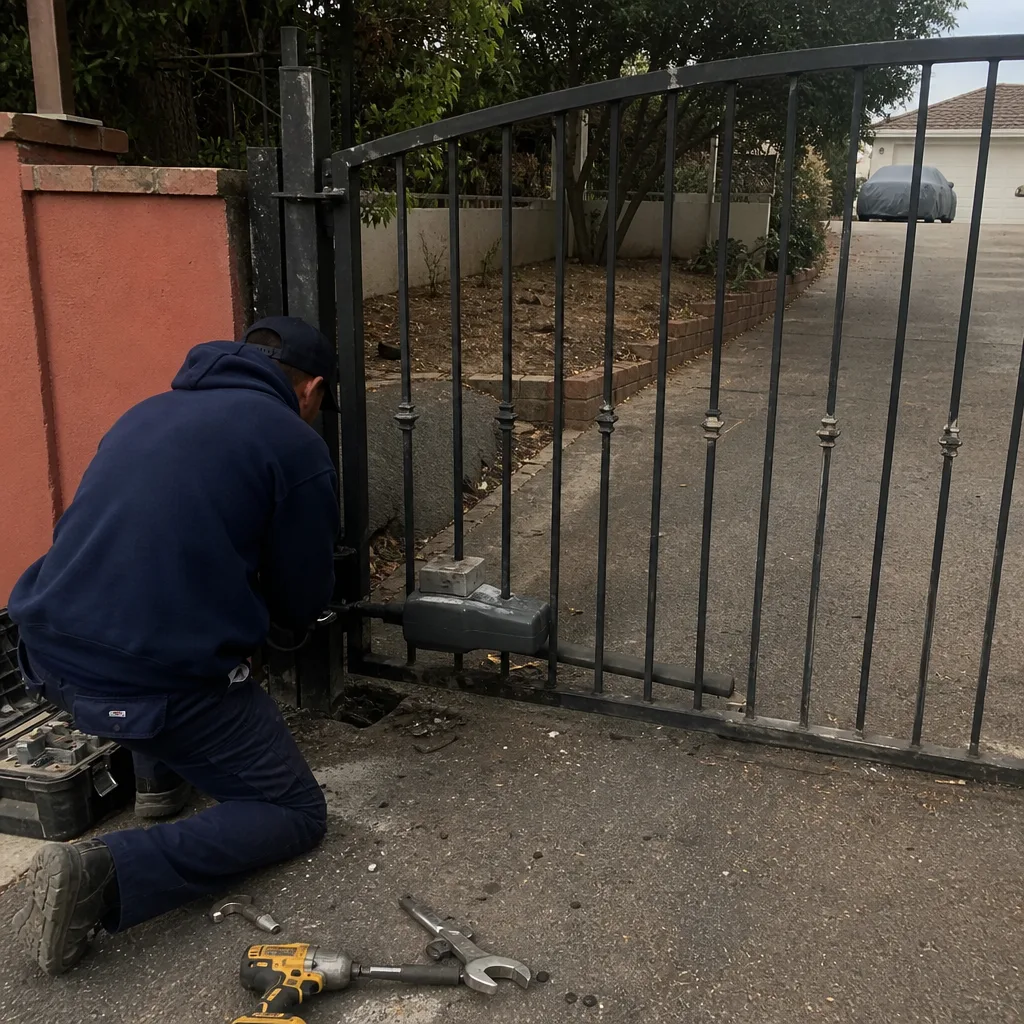 Before
 After
After Before
 After
After