
Last updated October 16, 2026
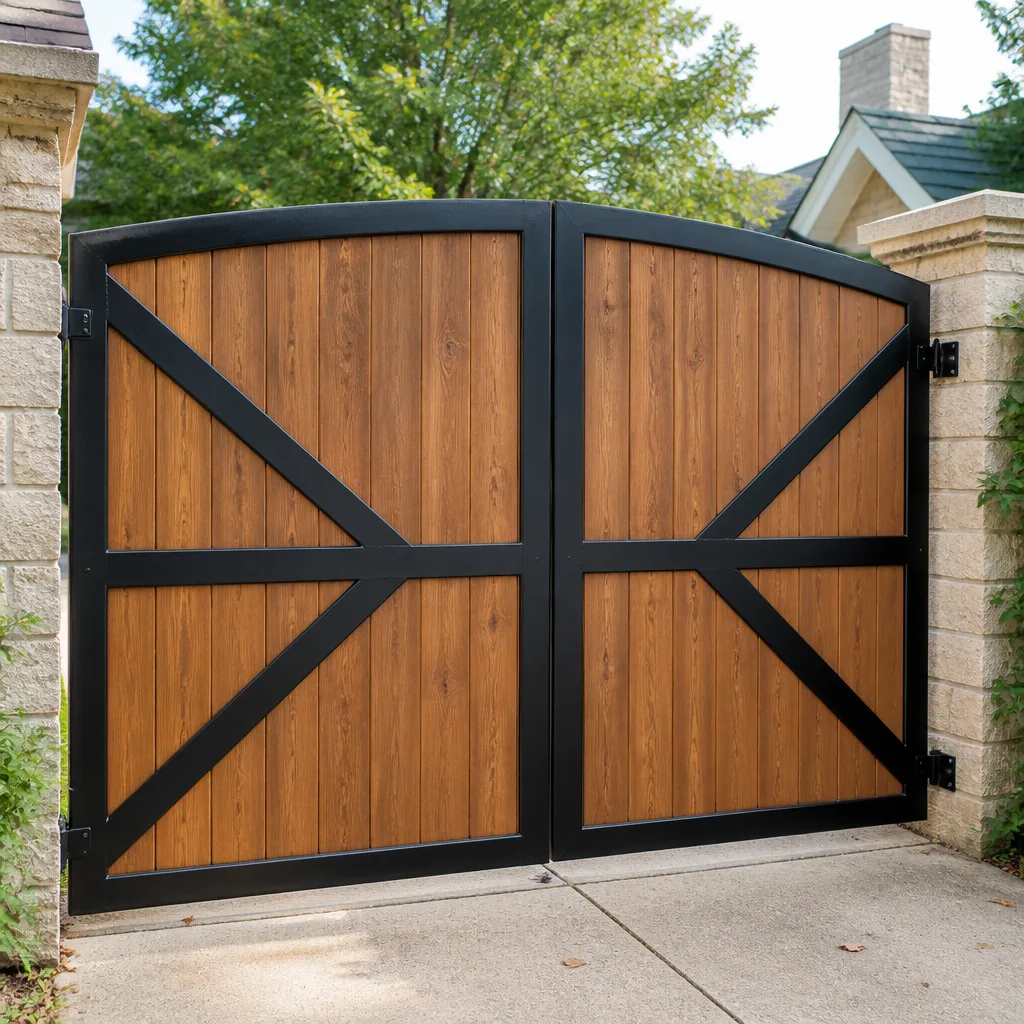 Wood & steel frame
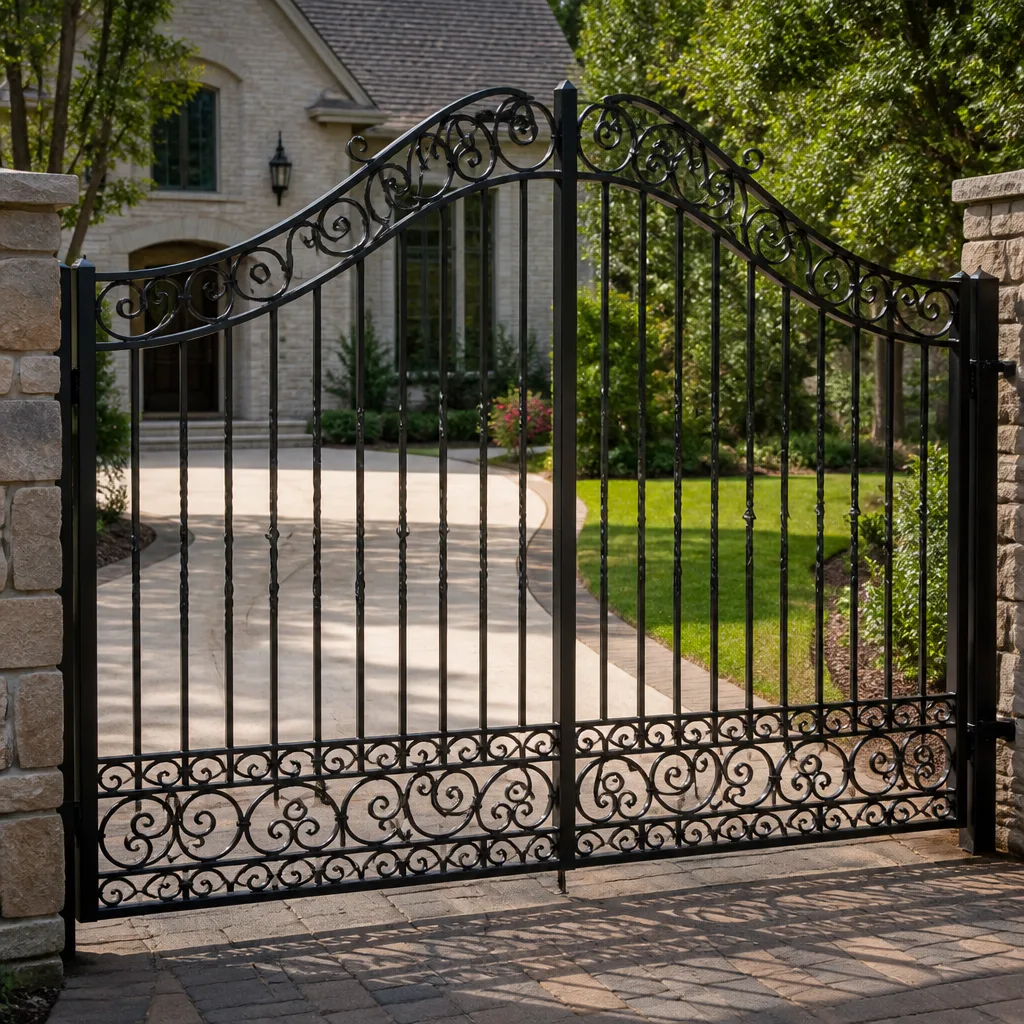 Wrought iron
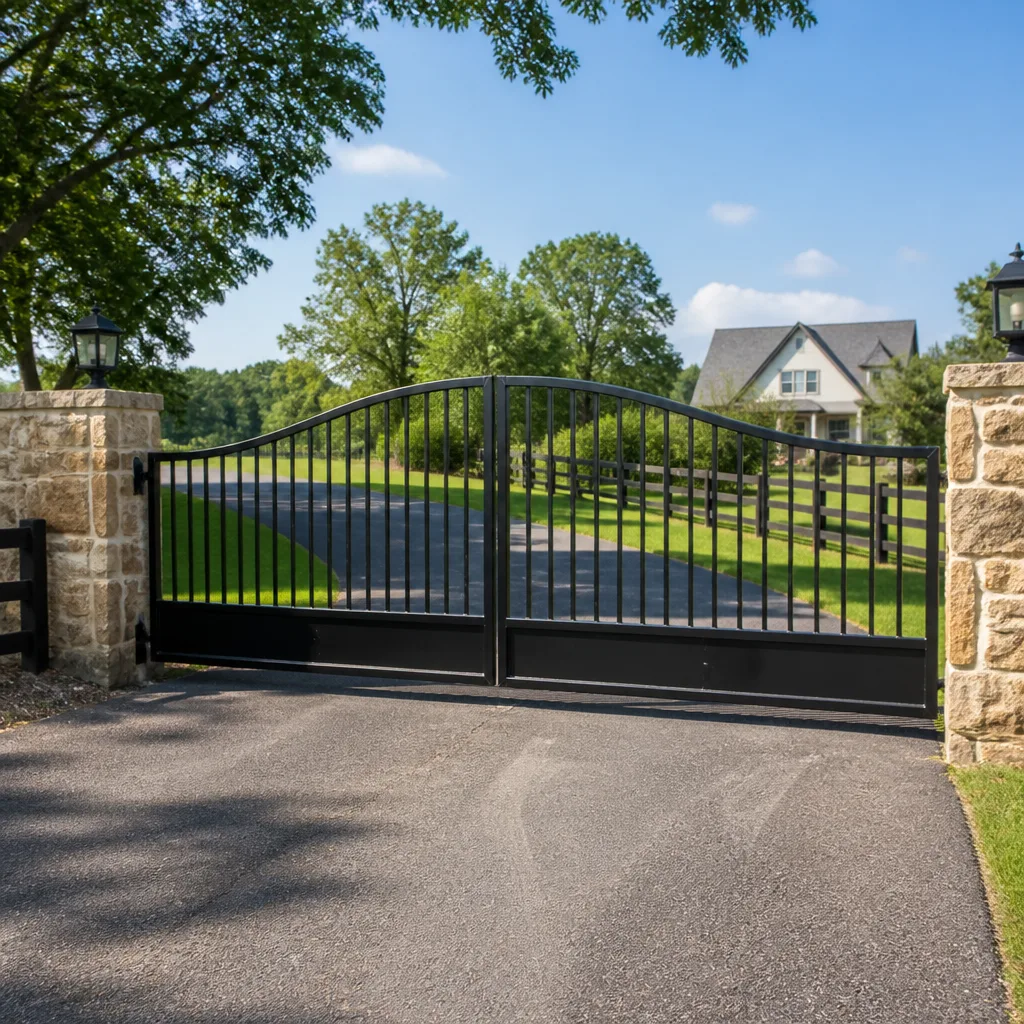 Farm & ranch
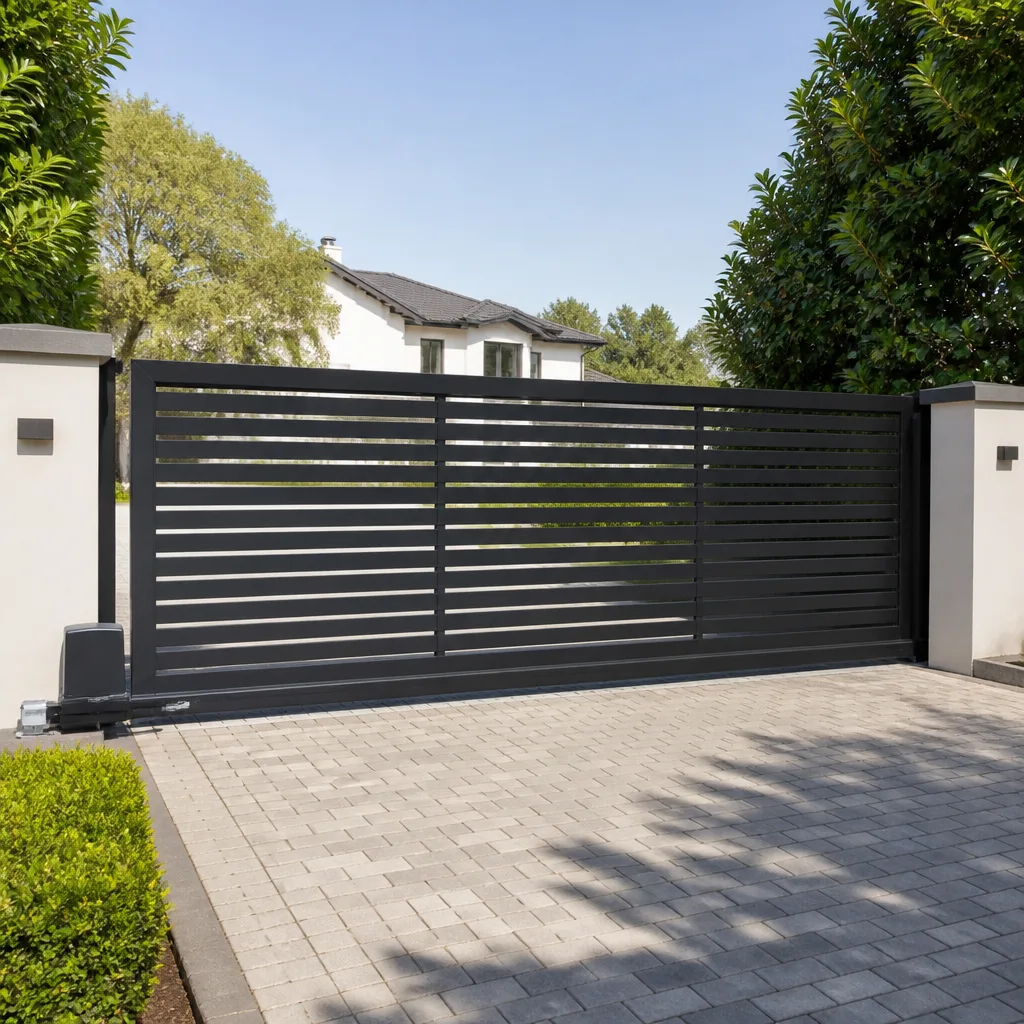 Sliding driveway gates
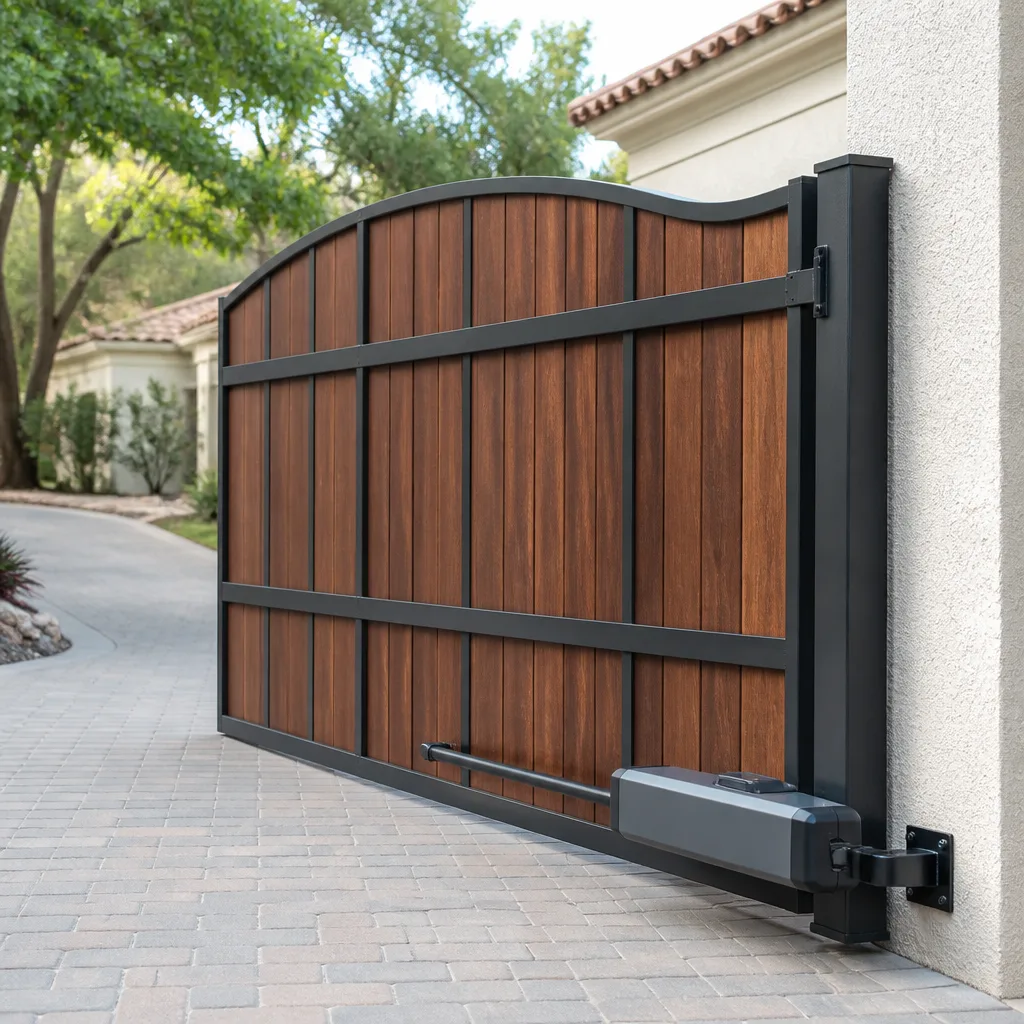 LiftMaster operators
Free on-site gate assessment - hinges, posts, and your LiftMaster or Nice gate operator checked before anything is quoted
The assessment is free and the quote is the invoice.
Get your free estimateGate Repair Maintenance Checklist for Woodland Hills Homeowners
Most gate maintenance advice tells you to look at the hinges and listen for strange noises. That is not maintenance. That is waiting for a failure to announce itself. The useful question is not “does anything look wrong?” but “what measurement tells me this part will fail in the next 90 days, and what measurement says it is still sound?” In Woodland Hills, where summer temperatures sit above 95°F for weeks and the Santa Ana winds blow fine dust into every moving part, those measurements matter more than they do in coastal neighborhoods. For a deeper look at local requirements, see our guide to Gate Repair Permits, Codes & Inspections in CA: What You Need to Know. This checklist gives you the pass/fail threshold for each component. No vague guidance. Just measurements, conditions, and a clear call: service now, or check again next month.
Quick Answer
A Woodland Hills gate maintenance checklist should test five measurable failure points: hinge play (more than 1/16-inch lateral movement means service now), gate sag (a drop of more than 3/8-inch at the latch end), ground clearance (less than 2 inches at any point of the swing arc), motor force response (the gate should reverse on 20 pounds of hand pressure), and lubrication condition (dry or gritty rollers mean the bearing is already wearing). Do this every 90 days between professional Gate Repair service calls, and keep a written log with dates and measurements.
Styles & brands we work with
Table of Contents
- Hinge Play: The 1/16-Inch Rule
- Gate Sag and Ground Clearance: Measure, Don’t Guess
- Lubrication Schedule for the Woodland Hills Microclimate
- Motor Force Test: Catch Torque Drift Before It Burns the Operator
- The Five Components a Technician Checks First
- How to Log Results for a Home Sale or Warranty Claim
- Common Mistakes to Avoid
- When to Call a Professional
Hinge Play: The 1/16-Inch Rule
Hinges carry the full weight of the gate every time it opens and closes. A steel gate weighing 300 pounds puts repeated stress on the hinge welds and the bearing surfaces inside each barrel. Wear is normal. The question is how much wear is acceptable before the weld or the bearing is compromised. In our experience on Gate Repair in Woodland Hills, the threshold is 1/16 of an inch of lateral play. Here is how to measure it.
Open the gate halfway so the weight is entirely on the hinges, not the latch or the operator. Place one hand on the top corner of the gate near the hinge, and push the gate laterally, perpendicular to its normal swing direction. Watch the hinge barrel. If the gate shifts side to side more than the thickness of a nickel (about 1/16 inch), the hinge bearing is worn beyond its tolerance. Book a service visit. If the movement is barely visible, or you feel no movement at all, the hinge is within spec. Log the result and move on.
Weld inspection matters just as much as the bearing check. Look at the point where the hinge plate meets the gate frame and the post. Hairline cracks in the weld or rust staining that flakes away when you scrape it with a screwdriver are early signs the weld is failing. Woodland Hills does not get coastal salt air, but the summer heat cycles expand and contract the steel enough to open small cracks over time. Once a crack starts, it propagates. A hinge that separates at the weld drops the gate, which can pull the motor mount out of alignment and turn a $300 hinge repair into a $1,800 motor replacement.
Corrosion on the hinge is not automatically a fail. Surface rust is common and treatable. The fail condition is pitting, where the rust has eaten into the metal surface and left visible craters. Pits reduce the thickness of the material and concentrate stress. If you can catch a fingernail in the rust pit, the hinge needs replacement, not wire-brushing.
Gate Sag and Ground Clearance: Measure, Don’t Guess
Every gate sags eventually. The steel flexes under its own weight, the post settles, and the hinge bearings compress. The maintenance question is not whether the gate is sagging. It is how much sag is acceptable before the latch stops engaging, the operator fights the extra load, or the gate drags on the concrete.
Measure sag at the latch end of the gate. Close the gate fully. Mark the height of the latch post with a piece of masking tape at the point where the latch would meet it. Now open the gate 90 degrees and observe the same point on the gate relative to the post. The vertical drop from closed to open is the sag measurement. A drop of 3/8 of an inch or less is within normal tolerance. More than 3/8 of an inch means the hinges or the post have moved enough that the gate is working against itself. The motor compensates by drawing more current, which shortens its life, and the latch may fail to engage on the return stroke.
Ground clearance is the second measurement. Walk the full swing arc of the gate and measure the distance from the lowest point of the gate frame to the ground at every point. The minimum safe clearance is 2 inches. In Woodland Hills, minor soil movement is common because the clay soil expands and contracts with moisture changes between dry summers and wet winters. A gate set with 3 inches of clearance in January can sit at 2-1/4 inches in August after the ground settles. If any point of the arc drops below 2 inches, the gate will start scraping on the concrete or catching on gravel. That adds resistance the motor must overcome, and it accelerates wear on the hinge bearings.
Post movement is the underlying cause of most sag. Check the gate post itself for verticality with a level. If the post has shifted more than 1/4 inch out of plumb, the sag is not a hinge problem. It is a foundation problem. Tightening or replacing hinges will not fix a post that is tilting in the ground. The post needs to be reset and re-anchored, which is a Gate Installation in Woodland Hills scope of work, not a maintenance touch-up.
Lubrication Schedule for the Woodland Hills Microclimate
Woodland Hills has a specific climate profile that changes the lubrication rules for gate hardware. The summers are dry and hot, which evaporates light oils quickly. The Santa Ana winds carry fine dust that mixes with grease and forms an abrasive paste. That paste is worse than no lubrication at all because it grinds the bearing surfaces every time the gate moves. The lubrication schedule that works in coastal Los Angeles does not work here.
Use a dry-film PTFE lubricant on hinge pins, rollers, and latch mechanisms in Woodland Hills. Dry-film lubricants leave a slippery coating that dries to the touch, so it does not attract dust the way wet grease does. Do not use WD-40 on gate hinges. WD-40 is a solvent and a light oil, not a long-term lubricant. It frees stuck parts, but it also strips away existing grease and evaporates within days in summer heat, leaving the bearing drier than before.
The schedule is quarterly. Every 90 days, apply the dry-film lubricant to these points:
- Hinge pins and barrel openings – two to three short sprays per hinge, then cycle the gate three or four times to distribute the lubricant.
- Roller assemblies – hit the axle, not the wheel face. The axle is where the friction lives.
- Latch mechanism – the latch spring and the receiver plate both benefit from a thin coat.
- Operator chain or screw drive (if the gate uses one) – use the grease specified in the operator manual, not a general-purpose spray.
If the gate is on a track with wheels, inspect the track itself during every lubrication cycle. Blow it out with a leaf blower or compressed air before lubricating. A roller running over pebbles and twigs will bind and flatten the wheel face, and that damage is irreversible. In the fall, leaf litter from mature oak trees in parts of Woodland Hills gets into the track within days, so the pre-lubrication clearing step matters more from October through December.
Motor Force Test: Catch Torque Drift Before It Burns the Operator
Gate operators do not usually fail because the motor burns out suddenly. They fail because the force required to move the gate creeps upward over months, and the motor pulls more current to compensate, until the windings overheat and the control board trips. The force settings on the operator are supposed to be calibrated to the gate’s actual weight and resistance. When the gate sags, the hinges wear, or the track fills with debris, the operator works harder. Homeowners can catch this drift with a no-tools test that takes less than five minutes.
The test is simple. Open the gate fully. Place your hand flat on the leading edge of the gate, about waist height. Press against the gate in the direction it would close, and increase pressure gradually. The gate should reverse direction when you apply roughly 20 pounds of force. A healthy, properly calibrated operator senses the resistance and reverses. If you have to lean into the gate to get it to reverse, or if the gate does not reverse at all, the force setting is too high. That is the drift.
Run the test in both directions, opening and closing. A gate can pass in one direction and fail in the other if the hinges are worn asymmetrically or the track has a high spot. Also run the test at the start of the travel, in the middle, and near the end. Operators reverse more easily at certain points in the cycle than others, and a sticky spot in the track only shows up when you test that exact position.
For safety, understand what this test is not. It is not a repair procedure. The force settings on most modern operators from manufacturers like FAAC and BFT are adjusted through the control board, and the procedure varies by model and revision. Adjusting force without the manual for your specific operator is a fast way to set the pressure too high, which creates a serious entrapment hazard. The test tells you whether the setting is wrong. The correction belongs to a Gate Motor Repair in Woodland Hills technician or an owner willing to follow the manufacturer’s instructions exactly.
The Five Components a Technician Checks First
When a gate technician arrives on-site in Woodland Hills, the first five minutes follow a standard sequence. We check the same five components in the same order every time, because failures cascade in a predictable pattern. You can run the same checks between service visits, and that is the point of this section.
- Ground clearance and swing path. Before touching anything mechanical, the technician walks the full arc and watches the gate move. Clearance issues cause most downstream mechanical failures. This is the check that catches a high spot in the concrete or a root pushing up the pavers before it breaks the hinge.
- Hinge wear and weld condition. Lateral play, pitting, and hairline cracks. This is the 1/16-inch rule from above, applied with the gate under full weight.
- Operator force response. The technician places the same 20-pound hand test on the gate in both directions and at multiple points. Most drift problems show up in this check immediately, before any tools come out.
- Limit switch function. The limit switches tell the operator where to stop the gate at the open and closed positions. A misaligned limit switch causes the gate to slam, bounce, or stop short, and the slamming alone will loosen hinge bolts within weeks. Technicians watch for the gate seating fully without impact at both ends of travel.
- Safety edge and loop detector. The safety edge is the pressure-sensitive strip on the leading edge of the gate. The loop detector senses vehicles. Both must respond correctly, or the gate is an entrapment risk. This check usually involves a screwdriver handle pressed into the safety edge to simulate contact.
These five checks cover the components that fail most often on Viking, Linear, and similar operators installed throughout Woodland Hills. If every check passes, the gate is likely safe and stable for another 90 days. If one check fails, the odds are high that a second component is already degrading behind the scenes.
How to Log Results for a Home Sale or Warranty Claim
A maintenance log is not a nice-to-have. It is evidence. When you sell a home in Woodland Hills, the gate is part of the property, and buyers will ask about its condition. A written log with dates, measurements, and service visits answers those questions without argument. When a part fails under warranty, the manufacturer will ask for proof of maintenance. A log with specific measurements beats a memory every time.
Build the log on a single sheet. Paper is fine; a note on your phone works too. The format matters less than the consistency. Every entry should record:
- The date of the inspection.
- Hinge play measurement (e.g., “less than 1/16 inch” or “approximately 1/8 inch on top hinge”).
- Sag measurement at the latch end (e.g., “1/4 inch drop, within tolerance”).
- Lowest ground clearance in the swing arc.
- Motor force test result (passed or failed, and in which direction).
- Lubrication applied and product used.
- Any service call placed, with the date and a one-line description of the work.
Keep photographs. A phone photo of the hinge barrel before and after lubrication takes ten seconds, and it provides a visual record if a warranty dispute arises. For warranty claims on a FAAC or BFT operator, a photo of the unit’s serial number plate is essential. Take that photo once, when the gate is working normally, and store it with the log. The day the operator fails is the wrong day to discover the serial number sticker has faded beyond reading.
When you call a technician, keep the service invoice with the log. The invoice should list what was done, what parts were used, and what measurements the technician recorded. A complete log plus invoices creates a service history that any future buyer or warranty department can read and trust. Carver Gate Repair Woodland Hills provides a written record on every visit, which you can file directly into the log without reformatting anything. You can also explore more guides & resources on our blog.
Common Mistakes to Avoid
- Greasing the hinge pins with heavy axle grease. Thick grease traps Woodland Hills dust and creates a grinding paste that accelerates bearing wear. Use a dry-film PTFE lubricant instead.
- Ignoring a scrape until it stops. A gate that scrapes the driveway and then stops scraping did not fix itself. The hinge or post moved, and the scrape temporarily stopped because the gate found a new path. By the time the scrape returns, the motor has been fighting extra load for weeks.
- Adjusting motor force by feel. Force settings on Linear and Viking operators are calibrated in pounds, not vibes. Turning the dial until “it seems fine” usually over-sets the force, which creates an entrapment hazard and reduces motor life.
- Testing the safety edge with your body. Do not use your leg or arm to block a closing gate to see if it reverses. Use a non-sacrificial object like a cardboard box or a broom handle. If the safety edge fails, the object gets damaged, not you.
- Ignoring the operator manual because “it’s just a gate.” Every operator from every manufacturer has model-specific maintenance requirements. A BFT operator has different lubrication points than a FAAC operator. The manual is the authoritative source, not general online advice.
- Waiting for the gate to stop opening before calling. Most operators fail gradually. The early signs are slower travel, a hum that gets louder, or the gate reversing for no obvious reason. Catching these signs early is a $200 service call. Waiting for total failure is often a $1,000 operator replacement.
When to Call a Professional
Call a professional when any measurement on this checklist fails: hinge play over 1/16 inch, sag over 3/8 inch, ground clearance under 2 inches, or motor force test marked as a fail in either direction. Also call when the gate makes a new sound that persists for more than a couple of cycles, or when the operator trips a breaker repeatedly. These are not maintenance items. They are failure conditions that will get worse and cost more the longer they sit. Carver Gate Repair Woodland Hills offers free estimates in Woodland Hills, and we cover Carver Gate Repair Woodland Hills home service area residents with a written price before any work starts. Call (650) 719-7207 to schedule.
See the difference
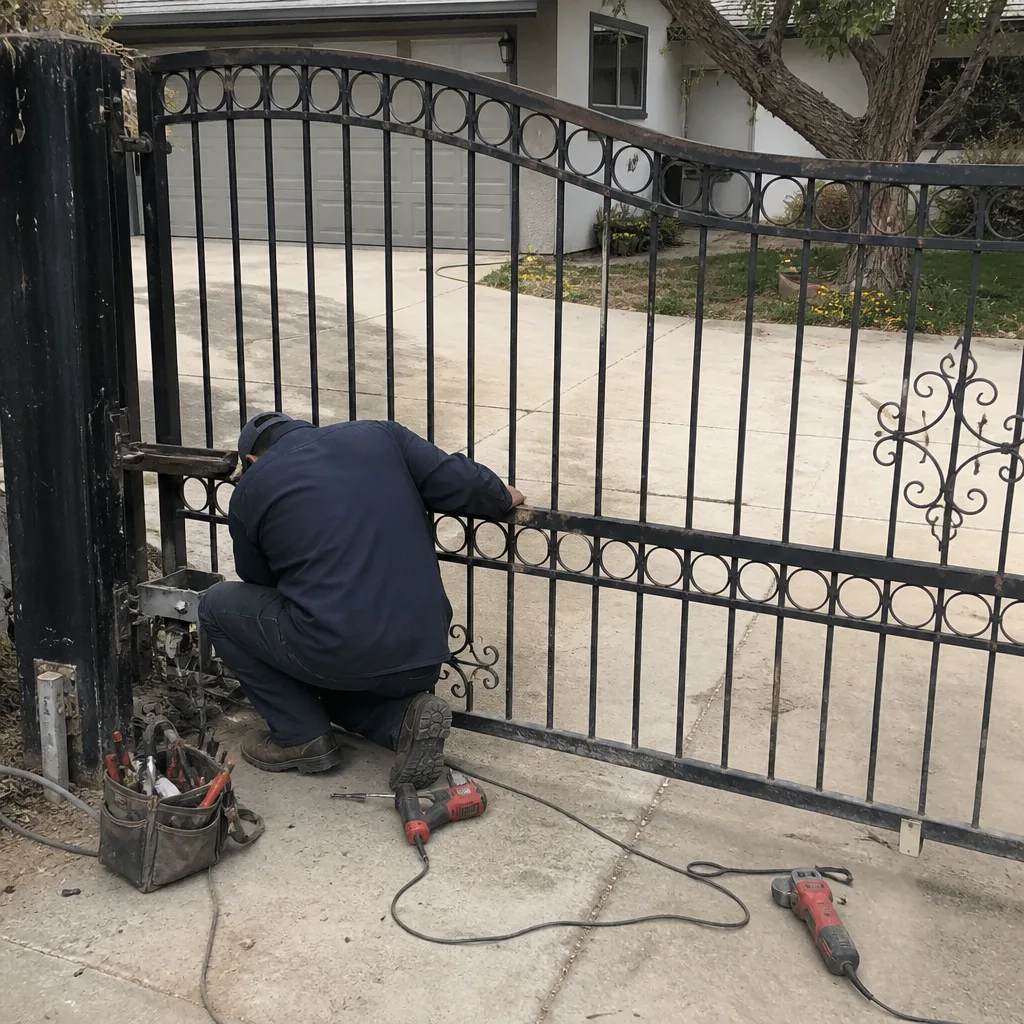 Before
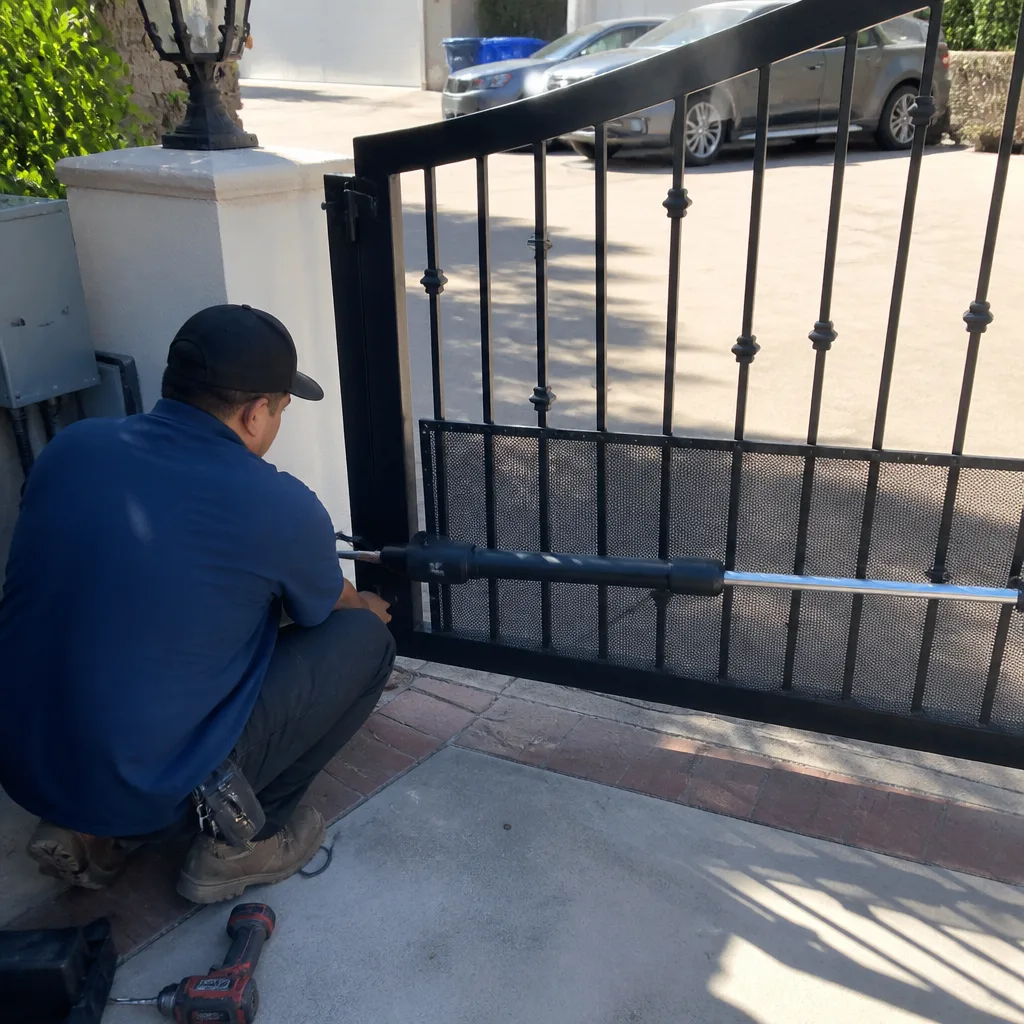 After
After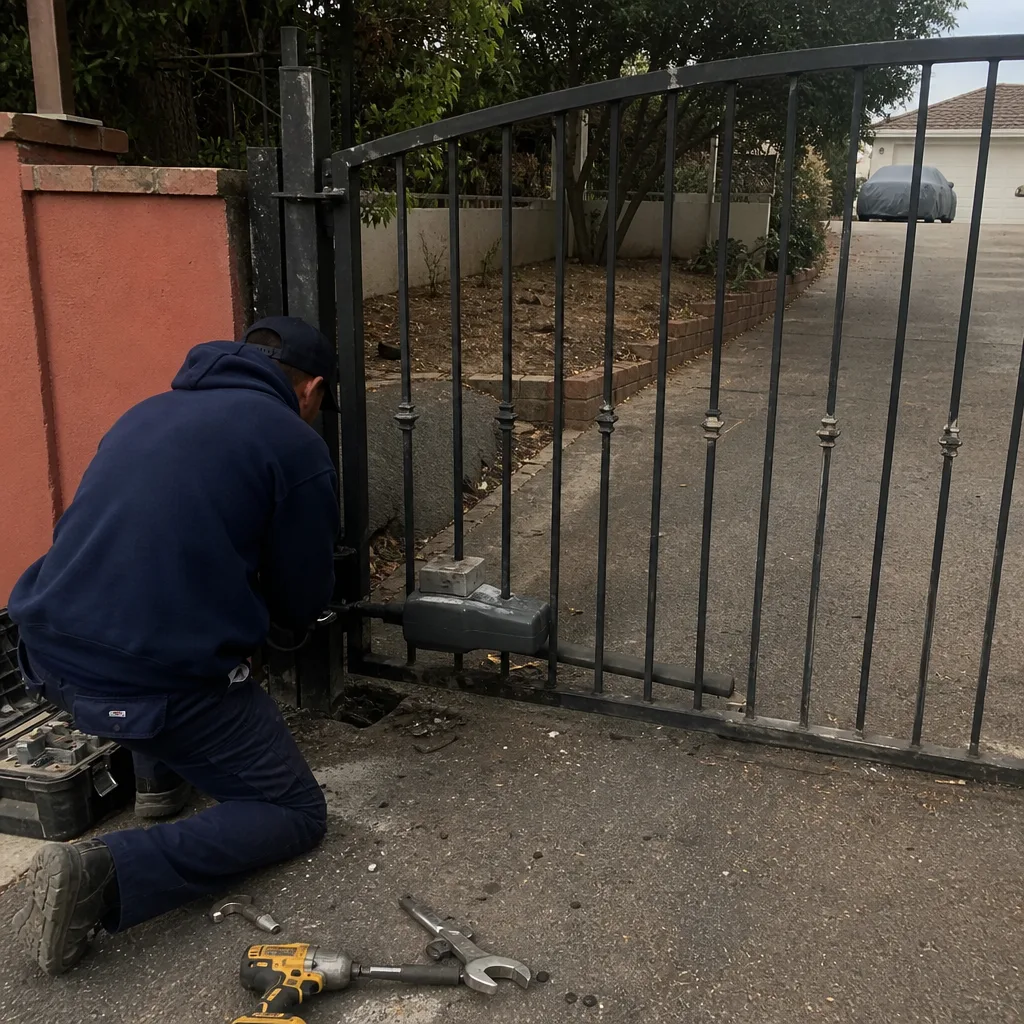 Before
 After
After Before
 After
AfterFrequently Asked Questions
Inspect your gate every 90 days in Woodland Hills, with an extra visual check after Santa Ana wind events. The quarterly cycle catches lubrication breakdown, hinge wear, and motor force drift before they become failures. If you have a high-cycle gate that opens more than 20 times per day, move to a monthly inspection schedule.
Use a dry-film PTFE lubricant on hinges, rollers, and latches in Woodland Hills. Dry-film products coat the surface and then dry, so they do not attract the fine dust that blows through the San Fernando Valley. Avoid wet greases and WD-40, both of which cause more problems than they solve in this climate.
A basic gate maintenance visit in Woodland Hills typically runs $95 to $180, including hinge lubrication, clearance adjustment, force calibration, and a written report of all measurements. If the visit uncovers worn parts, the technician should quote the repair separately with a written price before any additional work begins. Call (650) 719-7207 for an exact quote, and the estimate is free.
Hinge wear is the most common gate failure in Woodland Hills, driven by the dry-heat cycle that expands and contracts steel components through the summer. Hinge failure then cascades into sag, operator strain, and eventually motor burnout. Most motor replacements we perform could have been prevented by catching hinge wear at the 1/16-inch threshold. Learn what to watch for in our Gate Repair Warning Signs: A Woodland Hills Homeowner’s Reference Guide.
Yes. Open the gate fully, press on the leading edge with about 20 pounds of pressure, and watch whether the gate reverses. Test both directions and multiple points along the travel. If the gate does not reverse, do not adjust the force setting yourself unless you have the manufacturer’s manual. Call a professional for a force calibration.
Our technicians are trained on liftmaster, FAAC, BFT, Linear, Viking, Ghost Controls, DoorKing, Elite, and Mighty Mule operators. The calibration procedure varies by brand and model, and using the correct procedure for your specific operator matters. Call (650) 719-7207 and we will match the technician to the equipment already installed at your property.
The Bottom Line
A useful maintenance checklist gives you measurements, not vague instructions. Check hinge play with the 1/16-inch rule, sag with the 3/8-inch threshold, and ground clearance with the 2-inch minimum. Lubricate quarterly with a dry-film product suited to the Woodland Hills dust and heat. Run the motor force test every 90 days in both directions. Log every result with the date and the measurement, and keep the log somewhere you can find it when you sell the home or file a warranty claim. If any measurement fails, call a professional before the cascade starts. The gate will tell you what it needs, if you know what to measure.
Written by Lonnie Burke, Owner at Carver Gate Repair Woodland Hills, serving Woodland Hills since 2008.